
Solutions / Google Business Profile
Own the local search moment before the homeowner reaches your site
For many remodelers, Google Business Profile is the first sales page a local homeowner sees. Categories, services, photos, reviews, answers, and website alignment all shape whether you appear – and whether the person trusts the click. I turn the profile into an active local proof system.
3 signalsRelevance, distance, and prominence shape local visibility. You can influence two of them with focused, honest work.
The hard truth
Good remodeling work can still be invisible, unclear, or hard to choose
The setup gap
The profile is technically live and practically empty.
A broad category, weak services, old photos, missing attributes, and inconsistent business information leave Google and homeowners guessing.
The review gap
Requests happen only when someone remembers.
Happy clients move on, the team avoids awkward asks, and months pass without the fresh project-specific reviews that build trust.
The alignment gap
The profile and website tell different stories.
Services, markets, photos, and landing pages do not line up, so local relevance gets diluted and the next click lands on a generic page.
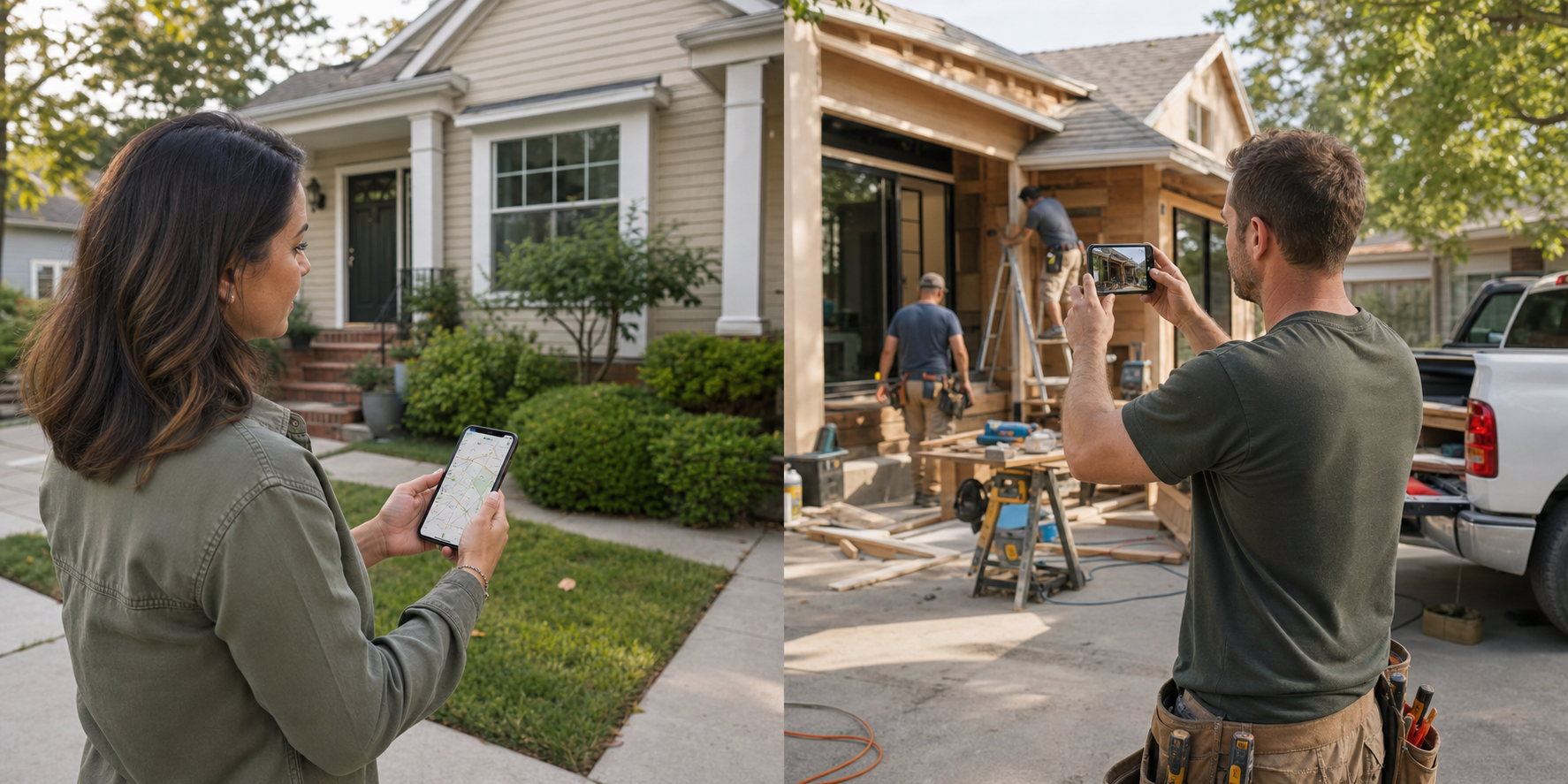
A strong local profile connects what people search, what you do, where you work, and the proof behind it.
What the system needs
What a complete local profile needs to do
Optimization is not keyword stuffing the business name. It is making the profile accurate, specific, current, and helpful. The best version gives Google a consistent set of facts and gives the homeowner enough proof to take the next step.
- Foundation: correct ownership, name, address or service-area setup, phone, hours, primary and secondary categories, and attributes.
- Services: clear remodeling offers written around real scope, without fabricated locations or promotional clutter.
- Visual proof: current project photos, team and process images, useful captions, and a reliable upload routine.
- Reviews: milestone-based requests, simple links, team roles, response guidance, and no incentives or review gating.
- Website alignment: a relevant landing page, consistent business details, strong local proof, and accurate tracking.
How the work moves
A four-part profile improvement plan
The profile should be repaired before it is fed. Posting every week does not make up for the wrong primary category, a weak landing page, or a broken review flow. I establish the facts, improve the proof, and then keep the profile active.
Audit
Review ownership, categories, services, business information, competitors, reviews, photos, website links, local visibility, and policy risks.
Align
Correct the profile, match the website and citations, choose the right landing page, and add campaign-aware tracking.
Build proof
Create the photo plan, review request moments, response framework, service descriptions, questions, and post themes.
Maintain
Publish useful updates, add current work, respond to reviews, watch edits and suspensions, and report the actions tied to real leads.
Real proof, useful context, and a clear next step beat decorative marketing.
Here is the pattern I keep seeing: the remodeler uploads twenty finished photos on one Friday, then nothing for six months. A smaller stream of current work, specific reviews, and aligned service information sends a much steadier trust signal.
The business outcome
Local visibility has to connect to a qualified call
More profile views are useful only when the next action makes sense. I watch calls, website clicks, direction requests where relevant, search themes, photo activity, review velocity, and the landing-page path. Then I compare that with service, location, project size, and sales outcome.
No one can guarantee the map pack for every searcher; location changes what each person sees. The practical goal is stronger visibility across the service area, a profile that earns the click, and a website that continues the same clear story.
The profile also needs an owner inside the business. Clear responsibility for photos, review requests, responses, and holiday hours prevents the slow drift back to stale information.
Questions remodelers ask
Straight answers before you invest
Should I hide my address?
If customers do not visit and you operate as a service-area business, follow Google’s current eligibility rules and configure the profile accordingly. Accuracy matters more than trying to look local everywhere.
Can I ask every client for a review?
Yes, if the request is honest and does not filter by expected sentiment. A consistent milestone – handoff, walkthrough, or follow-up – makes the ask easier and fair.
Do Google posts improve rankings?
Posts keep the profile useful and can support engagement, but they are one small part of the system. Categories, relevance, reviews, authority, and website alignment carry more weight.
Is your local profile helping the next homeowner choose?
Call me and I will tell you what looks incomplete, inconsistent, or risky. Or book a 30-minute local visibility review and let us find the first thing to fix.