
Social media / Instagram and TikTok
Make short-form video useful before you make it polished
Homeowners do not need another trending sound over a fast room reveal. They need a reason to stop: a hidden condition, smart layout change, material choice, cost driver, craft detail, or clear answer from someone who knows the work. I build a short-form system crews can capture without acting like creators.
5-shot planWide context, problem, person, detail, and result are enough to build many practical job-site videos.
The hard truth
Good remodeling work can still be invisible, unclear, or hard to choose
Hook
The video opens with a logo animation.
The first seconds do not show the room, problem, person, or question, so the viewer has no reason to stay.
Capture
The crew records without a story.
There are dozens of clips but no stable framing, explanation, clean audio, before view, or detail that supports the final edit.
Trust
The content feels staged or unsafe.
Forced scripts, messy permissions, missing protective gear, or filming sensitive homeowner details can damage the credibility the video should build.
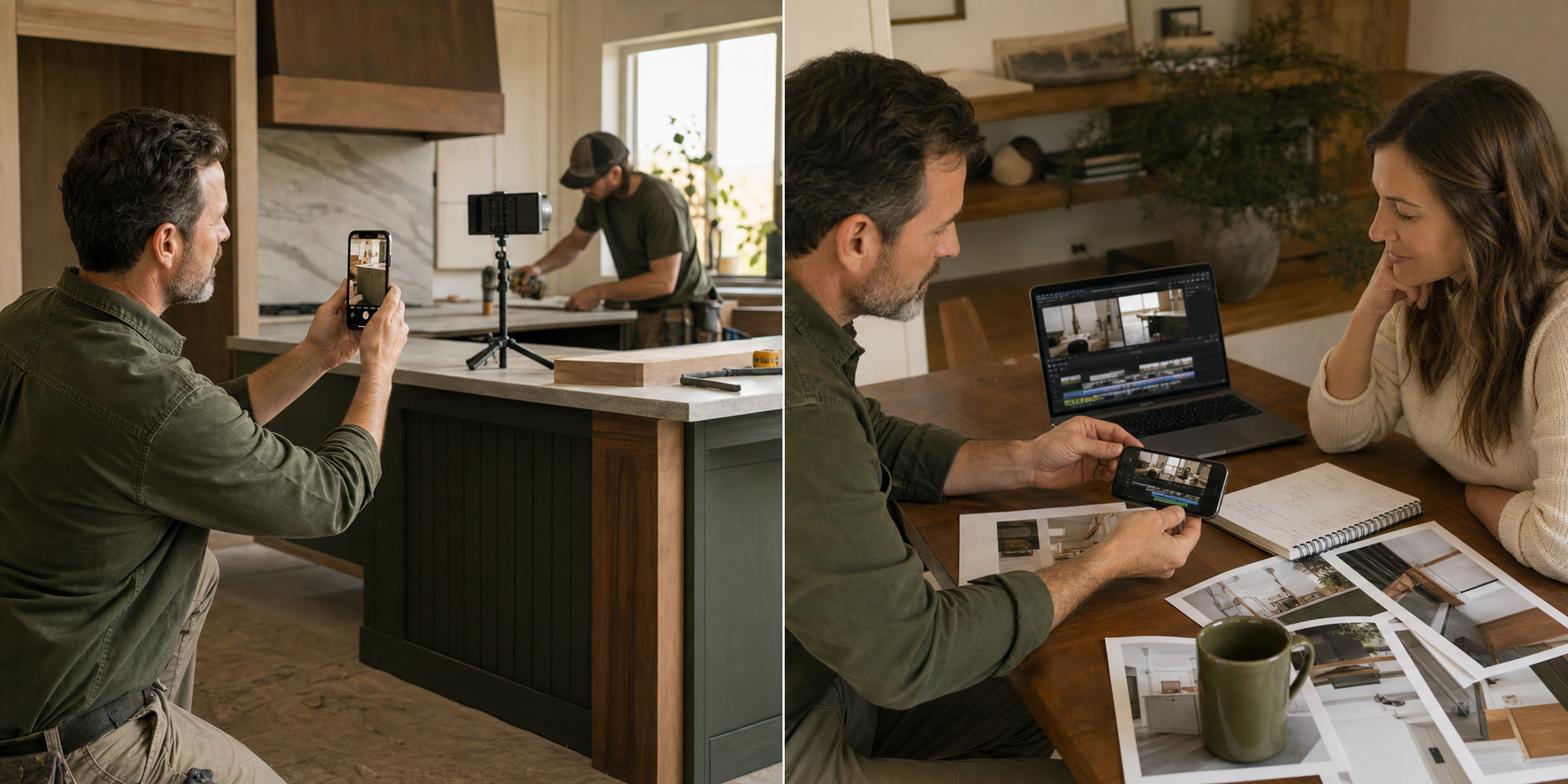
A specific point, clean framing, and real work beat a complicated production routine.
What the system needs
Short-form formats that fit remodeling work
The platform changes quickly, but useful formats last. I build a small library the team can recognize and repeat while each project supplies fresh subject matter.
- Problem reveal: show the constraint, explain why it matters, and preview the decision or repair.
- Detail lesson: focus on one cabinet, tile, lighting, waterproofing, layout, or finish choice and the tradeoff behind it.
- Progress update: orient the viewer, name the milestone, show what changed, and explain what happens next.
- Myth or question: answer one real buyer concern in direct language with project context instead of a generic talking head.
- Finished walkthrough: connect the completed room to the original problem, key decisions, and homeowner goal.
How the work moves
A production routine the job site can tolerate
The capture should take minutes, not interrupt the schedule. One person owns the shot list, the person on camera gets a simple prompt, and permissions are settled before the phone appears.
Prep
Choose the point, format, location, speaker, safety conditions, homeowner permission, five shots, and a short opening line.
Capture
Record vertical, clean the lens, stabilize, favor natural light, get room tone, leave edit handles, and repeat only what matters.
Edit
Cut pauses, lead with the strongest moment, use readable captions, keep color natural, verify claims, and remove private details.
Publish and respond
Write a specific caption, add local and service context, route the next step, answer real questions, and save useful comments as future topics.
Real proof, useful context, and a clear next step beat decorative marketing.
Here is the pattern I keep seeing: the owner thinks the crew needs scripts. Most people sound better answering one concrete prompt while pointing at the work: “What would have gone wrong if we kept the old layout?”
The business outcome
Video becomes a trust library
A steady archive gives prospects evidence of how the team thinks, communicates, protects the home, and solves problems. The videos also support service pages, project stories, proposals, email follow-up, recruiting, and the sales conversation.
Views matter in context. I also watch completion, rewatches, saves, shares, profile visits, website taps, direct messages, assisted leads, and the clips prospects mention. Ten thousand unfocused views can be less useful than 700 local views from the right homeowners.
Job-site check: Safety and privacy beat the content calendar. The frame cannot expose client documents, family photos, alarm panels, addresses, license plates, unsafe behavior, or a worker who did not agree to appear. A missed post is cheap. A homeowner trust issue or a clip that normalizes unsafe work is expensive. Before publishing, a second person checks the entire frame, captions, claims, audio, and visible background.
Keep building the system: Social strategy · Organic campaigns
Questions remodelers ask
Straight answers before you invest
How long should videos be?
As long as needed to deliver one clear point. Many job-site clips work in 20 to 45 seconds; a useful walkthrough may need more.
Do captions matter?
Yes. Many people watch without sound, and captions improve clarity and access. Keep them readable, accurate, and away from interface controls.
Should the owner be on camera?
A recognizable expert builds trust, but the system can also feature designers, project managers, craftspeople, voiceover, hands, plans, and the work itself.
What could your next job-site clip teach?
Call me, or book a 30-minute short-form review. I will build a practical shot list and format mix around the projects already moving.