
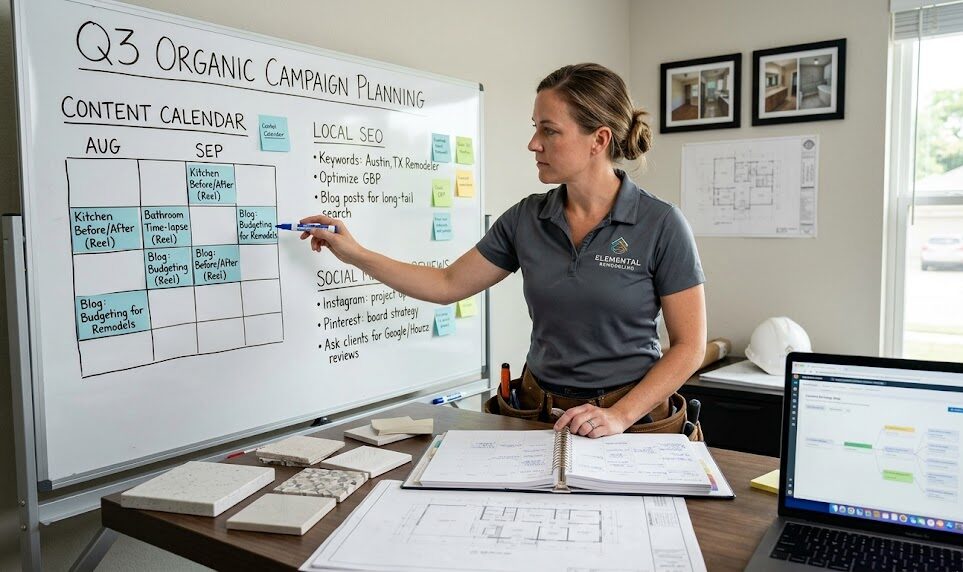

Organic Campaigns for Remodelers: A Practical Guide to Consistent Local Growth
Organic campaigns for remodelers help turn everyday expertise, project proof, homeowner questions, and local relevance into a repeatable visibility system.
Instead of relying on one-off posts, random blog topics, or occasional bursts of activity, an organic campaign gives every piece of content a job: attract the right homeowners, build trust, support service-area visibility, and move prospects toward a consultation or contact form.
For remodelers competing locally, this matters because homeowners rarely hire after seeing one post or reading one page. They need repeated, credible signals across search, social, Google Business Profile activity, website content, and project proof before they feel ready to reach out.
Why Organic Campaigns Matter for Remodelers
Remodeling is a high-consideration service. A homeowner may spend weeks or months researching project ideas, saving inspiration, comparing contractors, reading reviews, studying photos, and asking questions before they request an estimate.
Organic campaigns help remodelers stay visible during that entire decision journey. A kitchen campaign might include a service page update, a series of social posts, a Google Business Profile post, short-form video clips, FAQs, before-and-after content, and a blog article that answers common homeowner questions.
The point is not just to publish more. The point is to publish with a coordinated theme, clear audience, defined service focus, and measurable next step.
- Local visibility: Campaigns can reinforce services, locations, project types, and seasonal demand.
- Trust: Repeated content around the same topic helps homeowners understand your expertise and process.
- Content efficiency: One campaign idea can become articles, reels, posts, emails, GBP updates, and website improvements.
- Lead quality: Educational campaigns help prospects self-qualify before reaching out.
- Consistency: Campaign planning keeps marketing active even when the team is busy with project work.
Organic campaigns work best when they connect social media marketing, SEO and organic growth, and website and content systems into one practical rhythm.
What Works Today in Organic Campaigns for Remodelers
The best organic campaigns are built around business priorities, not just content ideas. That means choosing themes that connect to profitable services, active demand, seasonal timing, local market opportunities, or common homeowner objections.
A strong campaign has a clear center. For example, a “kitchen planning season” campaign might focus on layout decisions, budgeting questions, material comparisons, before-and-after proof, project timelines, and consultation readiness. Each asset reinforces the same theme from a different angle.
Service-Led Themes
Build campaigns around kitchens, bathrooms, basements, additions, design-build work, outdoor spaces, or the services your company wants more of.
Local Relevance
Use city, neighborhood, home type, seasonality, and regional project needs where they naturally support the campaign.
Multi-Channel Reuse
Turn one campaign into website content, social posts, short-form videos, GBP posts, FAQs, and lead-nurture assets.
Proof-Based Content
Use project photos, before-and-after examples, testimonials, process details, and real project lessons to support trust.
Clear Conversion Paths
Each campaign should guide homeowners toward a logical next step, such as a service page, contact page, estimate request, or consultation.
Measurement Rhythm
Track visibility, engagement, profile visits, website traffic, calls, forms, and lead quality so the campaign can improve over time.
Organic campaigns should be planned alongside social strategy and calendars, organic growth campaigns, and Megaphone so content production stays consistent without adding internal marketing overhead.
If your team is posting whenever someone remembers, writing articles without a theme, or publishing project photos with no next step, you may have content activity — but not a true organic campaign.
Common Organic Campaign Mistakes Remodelers Should Avoid
Organic campaigns can fail when they are too broad, too random, or too disconnected from revenue. The most effective campaigns are focused enough to be memorable and structured enough to create movement.
Trying to Promote Every Service at Once
A campaign works better when it has a clear focus. Instead of promoting “everything we do,” choose a project category, service area, seasonal need, or homeowner problem.
Publishing Without a Campaign Path
Every campaign needs a destination. Social posts, articles, videos, and GBP updates should route people toward a relevant page or contact path.
Separating SEO and Social Content
Search and social should reinforce each other. A strong campaign uses keyword insights to guide articles, reels, captions, FAQs, and homeowner education.
Using Project Photos Without Context
Beautiful project images help, but context drives trust. Explain the problem, decision, process, material choice, or transformation behind the photo.
Measuring Only Likes or Views
Organic campaigns should also be measured by website visits, profile actions, calls, forms, consultation requests, and lead quality.
Step-by-Step Organic Campaign Plan for Remodelers
A strong organic campaign does not need to be complicated. It needs a clear theme, a defined audience, a content map, a publishing rhythm, and a way to measure what happens next.
- Choose one business priority Select the service, project type, season, location, or homeowner problem the campaign should support.
- Map homeowner questions List the questions prospects ask before hiring: cost, timeline, materials, design options, process, permits, disruption, and expectations.
- Create a campaign content map Plan the article, service page connection, social posts, short-form videos, GBP posts, FAQs, and proof assets that will support the theme.
- Build the conversion path Decide where each asset should send people: a service page, project gallery, contact page, consultation form, or resource.
- Publish in a steady rhythm Spread campaign assets over several weeks so homeowners receive repeated, useful signals instead of one sudden content burst.
- Review results and refine Track traffic, engagement, saves, shares, profile visits, calls, forms, and lead quality. Use those signals to improve the next campaign.
Tools and Examples Remodelers Can Use
Organic campaigns become easier to manage when the process is structured. The goal is to help a remodeler publish consistently without forcing the owner, designer, or project manager to become a full-time marketer.
Campaign Calendar
Plan campaign themes by month or quarter, tied to services, local demand, seasonality, and business priorities.
Keyword and Topic Map
Use search behavior to decide which homeowner questions deserve articles, reels, captions, and FAQ content.
Project Proof Library
Organize before-and-after photos, walkthrough clips, testimonials, and process notes so campaigns have real evidence.
Social Scheduling System
Use a repeatable social calendar so posts, reels, and updates support the campaign instead of appearing randomly.
Website Content Hub
Connect campaign content to service pages, resources, and conversion paths that help homeowners take the next step.
Lead Tracking Review
Review which campaigns generate calls, forms, consultation requests, and better-fit project conversations.
Useful GYRO areas for campaign execution include social strategy and calendars, blog and resource content strategy, and Google Business Profile optimization for local leads.
How GYRO Helps Remodelers Build Organic Campaigns That Compound
GYRO helps remodelers grow without turning marketing into another full-time job. Organic campaigns fit directly into that promise because they turn scattered marketing tasks into a coordinated system.
Instead of asking remodelers to constantly decide what to post, what to write, and where to send people, GYRO helps organize campaign themes around services, locations, project proof, homeowner questions, and business goals. Strategist oversight keeps the message useful and brand-safe, while AI-assisted workflows help produce consistent SEO-aligned articles, reels, social posts, and local content.
| GYRO Growth Area | How It Supports Organic Campaigns for Remodelers |
|---|---|
| Organic Growth Campaigns | GYRO helps remodelers plan evergreen and seasonal campaigns that connect social content, website assets, and local visibility. |
| Social Strategy and Calendars | Campaigns become easier to execute when posting themes, formats, and timelines are organized in advance. |
| SEO and Organic Growth | Organic campaigns are stronger when backed by keyword research, content mapping, and search-aligned publishing. |
| Megaphone | GYRO’s strategist-guided content engine helps turn campaign themes into consistent articles, reels, posts, and supporting assets. |
Frequently Asked Questions
What are organic campaigns for remodelers?
How are organic campaigns different from regular posting?
What should remodelers build campaigns around?
How do organic campaigns generate leads?
Related GYRO Resources
Build evergreen and seasonal campaigns that support visibility, trust, and qualified lead generation.
Plan repeatable content themes, post formats, and publishing schedules for consistent growth.
Use GYRO’s strategist-guided content engine to turn campaign ideas into consistent publishing assets.