
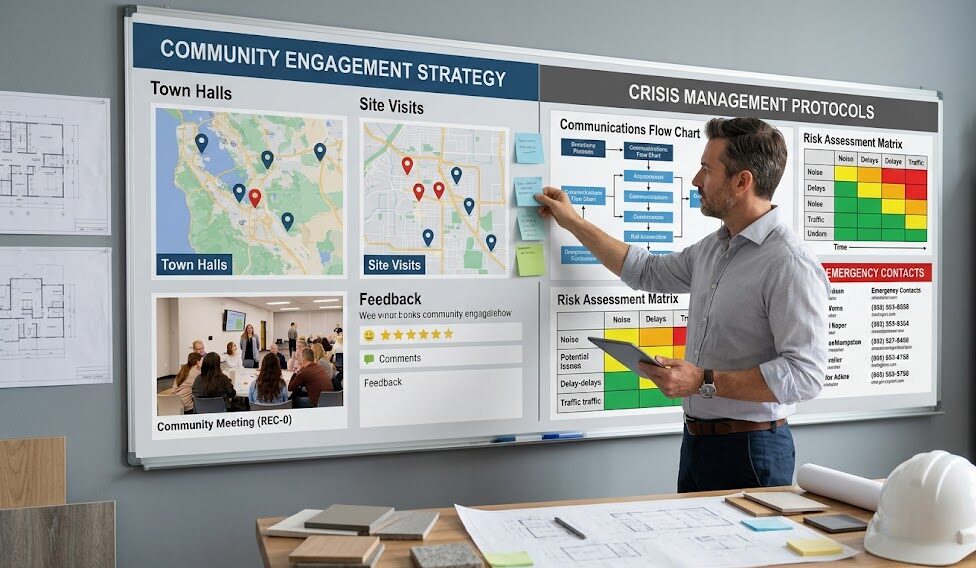

Community Engagement and Crisis Management for Remodelers
Community engagement and crisis management help remodelers protect trust before, during, and after reputation-sensitive moments.
For a local remodeling company, reputation is built in public: reviews, social comments, neighborhood conversations, Google Business Profile activity, referrals, project photos, and how the company responds when something goes wrong.
A clear community management process helps remodelers answer questions, respond to feedback, handle criticism, and preserve credibility without reacting emotionally or disappearing when homeowners are watching.
Why Community Engagement and Crisis Management Matter for Remodelers
Remodeling is personal. Projects happen inside someone’s home, often with large budgets, long timelines, emotional decisions, and disruption to daily routines. That makes trust more fragile than it is in many other industries.
Even strong remodelers can face public friction: a delayed schedule, a misunderstanding about scope, a frustrated comment, a mixed review, a subcontractor issue, a noisy jobsite concern, or a homeowner who feels unheard. How the company responds can either reinforce professionalism or make the situation worse.
Community engagement is the everyday side of reputation management. It includes responding to comments, thanking reviewers, answering questions, sharing helpful updates, and showing that the business is present. Crisis management is the prepared response when tension escalates and the company needs to protect trust quickly, calmly, and accurately.
- Local trust: Thoughtful public responses show homeowners that the company listens and follows through.
- Review resilience: A clear process helps teams respond to negative or mixed feedback without panic.
- Brand consistency: Response templates and escalation rules keep communication professional.
- Lead confidence: Prospects often read how a company responds, not just what customers say.
- Operational learning: Feedback patterns can reveal process gaps, communication issues, or content opportunities.
This work should connect with reputation and review management, review strategy and templates, and Google Business Profile management so public trust is handled as a system, not an afterthought.
What Works Today in Community Management for Remodelers
The strongest community management systems are proactive, not reactive. Remodelers should not wait until a negative review appears to decide who responds, what gets said, or when an issue should be escalated offline.
Good community engagement starts with a simple standard: respond like a calm, accountable professional. That means acknowledging the person, avoiding defensiveness, protecting client privacy, giving a clear next step, and moving sensitive details into a private conversation when needed.
Clear Response Ownership
Decide who monitors comments, reviews, messages, and Google Business Profile activity so public feedback is not missed.
Response Templates
Use flexible templates for praise, questions, neutral feedback, complaints, and escalated issues while keeping replies human.
Escalation Rules
Define when a comment should go to the owner, project manager, sales lead, or client success contact before a public reply is posted.
Privacy Protection
Avoid discussing private project details, contract terms, personal information, or unresolved disputes in public threads.
Public Calm, Private Resolution
Acknowledge the concern publicly, then invite the person into a direct conversation where the issue can be handled properly.
Feedback-to-Content Loop
Turn repeated questions or concerns into better FAQs, website copy, social posts, and process education.
Community engagement should also work alongside social media marketing, social strategy and calendars, and blog and resource content strategy so recurring questions become useful public education.
If your team only responds when there is a problem, the community may see silence as the default and crisis response as the exception. Trust is easier to protect when engagement is already consistent.
Common Community and Crisis Management Mistakes Remodelers Should Avoid
Most reputation mistakes happen under pressure. A frustrated homeowner posts publicly, the team feels defensive, and the response happens too quickly or too late. A prepared process helps prevent avoidable damage.
Ignoring Public Feedback
Silence can look careless, especially when prospects are reading reviews or comments. Even a simple acknowledgment can show that the company is attentive.
Responding Defensively
Public replies should not sound argumentative. The goal is to show professionalism, not win an argument in front of future customers.
Sharing Too Much Detail Publicly
Project issues may involve contracts, schedules, budgets, private homeowner information, or incomplete facts. Sensitive details should move offline.
Treating Every Comment Like a Crisis
Not every concern requires a major response. A good process separates simple questions, normal criticism, legitimate complaints, and true escalation risks.
Failing to Learn From Patterns
If homeowners repeatedly ask about timelines, pricing, communication, or disruption, the issue may need better content, better sales expectations, or better internal process.
Step-by-Step Community Engagement and Crisis Management Process
A practical process helps remodelers respond quickly without reacting emotionally. The goal is to protect trust, resolve issues where possible, and keep public communication professional.
- Define monitoring responsibilities Decide who checks Google reviews, Google Business Profile questions, social comments, direct messages, and website inquiries each business day.
- Create response categories Group interactions into praise, questions, neutral feedback, service concerns, negative reviews, urgent project issues, and potential escalation risks.
- Build flexible response templates Create approved starting points for common situations, but adjust each response so it sounds human, specific, and appropriate.
- Set escalation rules Clarify when a response needs leadership review, project manager input, legal caution, or direct homeowner follow-up before a public reply is posted.
- Move sensitive issues offline Publicly acknowledge the concern, then invite the person to continue by phone, email, or direct message so details can be handled responsibly.
- Document and improve Track recurring issues, response times, outcomes, and content gaps. Use those insights to improve processes, FAQs, and homeowner education.
Tools and Examples Remodelers Can Use
Community engagement becomes easier when remodelers use simple systems that make monitoring, responding, and learning repeatable. The goal is not to overcomplicate reputation management. The goal is to avoid missed feedback and inconsistent responses.
Review Monitoring Checklist
Track Google reviews, review requests, response status, unresolved concerns, and follow-up actions.
Social Inbox Routine
Set a daily or weekly rhythm for checking comments, messages, tags, mentions, and frequently asked questions.
Response Template Library
Maintain approved templates for positive reviews, neutral feedback, complaints, project questions, and crisis-sensitive replies.
Escalation Matrix
Define who should review issues involving active clients, safety concerns, legal sensitivity, payment disputes, or public misinformation.
FAQ and Content Tracker
Record repeated homeowner questions so they can become blog posts, website FAQs, Google Business Profile content, or social posts.
Lead Confidence Review
Review whether public responses, reviews, and social engagement make the brand feel more trustworthy to future prospects.
Useful GYRO areas for this system include reputation and review management, review strategy and templates, and Google Business Profile optimization for local leads.
How GYRO Helps Remodelers Protect Trust and Stay Visible
GYRO helps remodelers grow without turning reputation management into another full-time job. Community engagement and crisis management fit directly into that promise because public trust affects lead generation, close rates, referrals, and local visibility.
Instead of leaving comments, reviews, and public questions to chance, GYRO helps organize response systems, content planning, social strategy, review workflows, and Google Business Profile activity into a repeatable process. Strategist oversight keeps messaging clear and brand-safe, while AI-assisted workflows help turn recurring questions and reputation themes into useful content.
| GYRO Growth Area | How It Supports Community Engagement and Crisis Management |
|---|---|
| Reputation and Review Management | GYRO helps remodelers organize response workflows, review templates, and reputation-sensitive messaging. |
| Google Business Profile | GYRO supports local trust signals through profile activity, review responses, optimization, and consistent public presence. |
| Social Media Marketing | Community engagement becomes stronger when comments, DMs, posts, and content calendars are managed as part of one social system. |
| Website and Content | Repeated questions and concerns can become clearer FAQs, service content, process pages, and educational resources. |
Frequently Asked Questions
What is community engagement and crisis management for remodelers?
Why does crisis management matter for remodeling companies?
Should remodelers respond to negative reviews?
How can community engagement support lead generation?
Related GYRO Resources
Build review systems and response workflows that protect trust and support local lead generation.
Use structured review workflows and response templates to manage public trust more consistently.
Improve local visibility and public trust through profile optimization, review activity, and local engagement.