
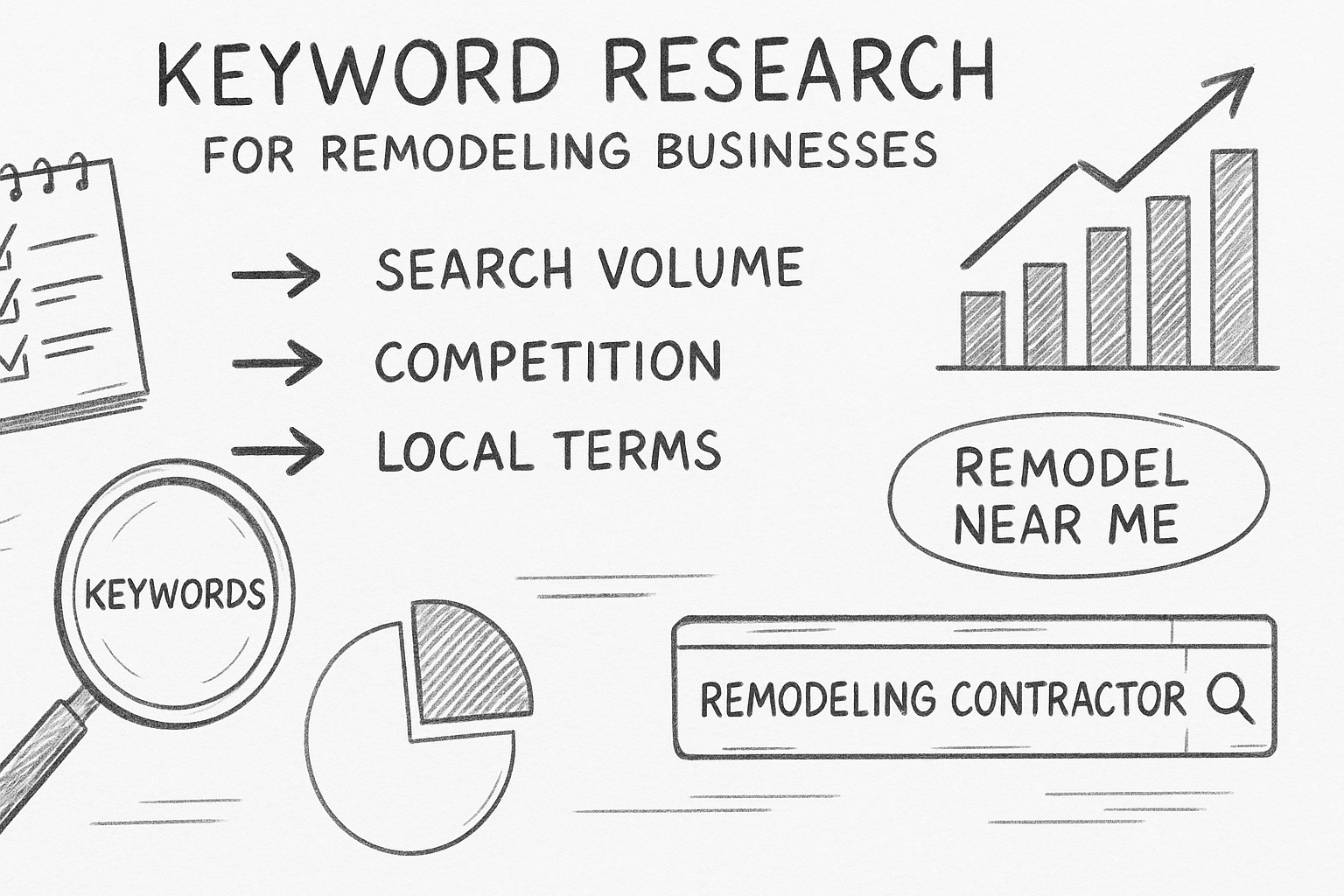
When a homeowner types “kitchen remodeler near me” or “bathroom remodel cost in [your city]” into Google, the keywords they use decide who shows up first. If your website doesn’t reflect how real people actually search, you’re leaving projects and profit on the table.
Keyword research is how you align your online presence with the language homeowners use at each stage of their decision-making journey. At GYRO (Grow Your Remodel Outfit), we use strategist-guided, AI-assisted keyword research to build content systems that attract the right projects: kitchens, baths, basements, additions, and design-build work. This guide walks you through a practical, remodeler-focused approach to keyword research you can actually use.
Why Keyword Research Matters for Remodelers
Most remodelers don’t need more traffic they need the right traffic. Good keyword research helps you:
- Attract homeowners who are ready to remodel: People searching “kitchen remodel contractor [city]” are much closer to hiring than those just browsing ideas.
- Match content to business goals: Focus on keywords tied to profitable services like full kitchen remodels, not just generic “home improvement tips.”
- Organize your website: Each service page, blog, and project gallery can be built around clear keyword themes.
- Support long-term SEO growth: A structured keyword plan compounds over time as you add content, case studies, and project photos.
Instead of guessing topics week to week, keyword research gives you a roadmap for your website, blog, and even your social content.
Start With Your Services and Ideal Projects
Before you open any keyword tool, you need clarity on what you actually want to rank for. Keyword research works best when it starts from your business model:
List your main revenue drivers: kitchen remodeling, bathroom remodeling, basement finishing, whole-home remodels, additions, design-build services, etc. These will become your primary keyword “buckets.”
Note ideal project size, budget range, and locations you love working in. This helps you prioritize keywords like “luxury kitchen remodel [city]” or “whole-home renovation [neighborhood].”
Think of Keywords in Four Buckets:
- → Service keywords: “kitchen remodeling,” “bathroom renovation,” “design-build contractor.”
- → Location keywords: “[city] kitchen remodeler,” “home remodeling in [suburb].”
- → Problem/goal keywords: “open concept kitchen remodel,” “finish dark basement,” “update small bathroom.”
- → Intent keywords: “cost,” “contractor,” “near me,” “ideas,” “before and after.”
Combining these buckets gives you realistic, high-intent phrases like “kitchen remodeling contractor [city]” or “small bathroom remodel ideas before and after.”
Understanding Keyword Intent (So You Don’t Attract the Wrong Traffic)
Two keywords can look similar but reflect very different intent. Understanding why someone is searching helps you decide which terms to prioritize and what kind of content to create.
-
Informational Intent
Examples: “kitchen remodel ideas,” “how long does a bathroom remodel take,” “basement finishing permits [city].”
Use these for blogs, guides, and educational resources. They’re great for top-of-funnel awareness and email list growth. -
Comparison Intent
Examples: “design-build vs general contractor,” “quartz vs granite for kitchen,” “DIY vs professional basement finishing.”
These searchers are weighing options. Comparison content can help move them closer to booking a consult. -
Transactional / Hire-Now Intent
Examples: “kitchen remodeler near me,” “bathroom renovation contractor [city],” “home addition company [area].”
These belong on service pages, location pages, and landing pages built to convert visitors into inquiries. -
Brand Intent
Examples: “[Your Company] reviews,” “[Your Company] remodeling,” “[Your Company] projects.”
Make sure you rank for your own name with strong brand pages, testimonial collections, and project portfolios.
Use Simple Tools to Discover Remodeling Keywords
You don’t need fancy software to get started. Focus on tools that show you how homeowners naturally phrase their searches:
|
Google Autocomplete & “People Also Ask”
How to use it: Start typing phrases like “kitchen remodel…” or “bathroom contractor [city]” and note the suggestions. Scroll to the “People Also Ask” box for common questions you can turn into blog posts and FAQs.
|
|
Free & Freemium Keyword Tools
Examples: Google Keyword Planner, Google Trends, and other basic keyword tools.
What to look for: Search volume ranges, suggested phrases, and related terms that include your city or nearby areas. |
|
Your Own CRM, Inbox, and FAQs
Real homeowner language: Look at how clients describe their projects in inquiry forms, emails, and consult notes. These phrases often become strong, conversion-focused keywords and headlines.
|
Study Competitors Who Already Rank
Some of your best keyword ideas will come from remodelers who are already winning in search results.
Simple Competitor Scan:
- Search “kitchen remodeler [city]” or “bathroom renovation contractor [city].” Open the top 3–5 non-ad results.
- Note the exact phrases in their page titles, H1 headings, and section headings.
- Look for location mentions (neighborhoods, suburbs, regions) and project types they highlight.
- Check if they have supporting content like blogs, FAQs, and project galleries built around similar terms.
You’re not copying, you’re learning what Google already associates with successful local remodelers, then shaping your own, stronger version that reflects your differentiators.
Lean Into Long-Tail Keywords (Where Smaller Remodelers Win)
Big national sites may dominate broad terms like “home remodeling,” but remodelers can win with more specific, high-intent phrases often called long-tail keywords.
Example Long-Tail Keyword Ideas:
- → “small kitchen remodel contractor in [neighborhood]”
- → “basement finishing company for walkout basements [city]”
- → “accessible bathroom remodel specialist [city]”
- → “design-build firm for whole-home remodels [region]”
- → “modern farmhouse kitchen remodel before and after [city]”
These may have lower search volume individually, but they’re easier to rank for and much closer to real projects you want in your pipeline.
Build a Simple Keyword Map for Your Website
Once you’ve collected a list of relevant phrases, the next step is to organize them into a clear keyword map a plan that ties keywords to specific pages on your site.
-
Assign One Primary Keyword Per Core Page
For each main service (kitchens, baths, basements, additions, design-build), choose a primary keyword like “kitchen remodeling in [city]” and a few close variations. That primary term should guide the page title, H1, and overall copy. -
Group Supporting Keywords
Add related phrases under each page. For a kitchen page, this might include “open-concept kitchen remodel,” “kitchen cabinet replacement,” and “kitchen island remodel [city].” -
Map Topics for Blogs & Guides
Informational and comparison terms (“bathroom remodel cost [city],” “design-build vs contractor”) go into a content calendar. GYRO’s remodeling blog content calendar style approach helps turn these into weekly or monthly posts. -
Connect to Portfolios and Case Studies
Use keyword themes in your project portfolios and case studies so search engines link your expertise to real project outcomes.
Turn Keywords into Content Across Channels
Well-researched keywords shouldn’t just live in a spreadsheet. They should guide your website structure, blog strategy, and social media content.
Where Your Keywords Should Show Up:
- Service & location pages (service pages that rank and convert).
- Blog articles and resources (blogging for remodelers and why every remodeler needs a blog).
- Project galleries and before/after photos (before-and-after galleries).
- Homepage messaging and CTAs (homepage layout for remodelers).
- Video titles, YouTube descriptions, Instagram captions, and Reels.
GYRO’s content engine helps ensure your target keywords appear consistently in all of these places, without turning every piece of content into a manual rewrite project.
Review and Refresh Your Keywords Regularly
Search behavior changes. New neighborhoods grow, trends shift (“open shelving,” “spa bathroom,” “modern farmhouse”), and you may expand your services or territory. That’s why keyword research isn’t a one-time task.
-
Quarterly Check-In
Review which pages are getting traffic and leads. Are certain services underrepresented in search? Do new questions keep popping up in consults that you haven’t addressed on your site? -
Update Your Map
Add new long-tail phrases, remove terms that no longer fit, and refine which keywords are assigned to which pages. -
Create or Refresh Content
Turn new keyword ideas into fresh blogs, updated service pages, and new case studies. Refresh important pages with better examples, photos, and FAQs based on real client questions. -
Use Data, Not Guesswork
Tools like Google Search Console and analytics help you see which searches are already leading to your site. Build on what’s working, rather than constantly starting over.
How GYRO Turns Keyword Research into a Growth Engine
GYRO exists to remove the guesswork from marketing for remodelers. Instead of trying to “do SEO” in your spare time, you get a strategist plus an AI-powered content engine that:
- Researches what homeowners in your market are actually searching for.
- Builds a keyword roadmap tied directly to your services, locations, and profit goals.
- Produces SEO-aligned articles, landing pages, and social content around those terms.
- Routes content back to high-value project types kitchens, baths, basements, additions, and more.
- Has a human strategist review tone, accuracy, and brand fit before anything goes live.
If you want to go deeper, GYRO’s SEO Strategy and Audits and Blog and Resource Content Strategy services are built to turn keyword research into a repeatable system not a one-off exercise.
Want a Keyword Roadmap Built Around Your Best Projects?
If you’re guessing at blog topics or service page titles, you’re working harder than you need to. GYRO can help you build a clear keyword strategy that aligns with your services, market, and capacity then turn that strategy into content that actually ships.
Key Takeaways
Keyword Research Should Feel Like a Plan, Not a Puzzle
- Start with your core services, ideal clients, and locations then build keywords around real business goals.
- Pay attention to intent: some keywords are for education, others are for “hire now,” and both matter in your funnel.
- Use simple tools, competitor research, and client language to discover long-tail phrases you can realistically rank for.
- Map keywords to pages and content types so your website, blog, and social channels all pull in the same direction.
- Review your keyword strategy regularly so you stay aligned with how homeowners search today not three years ago.
Done well, keyword research doesn’t just bring more traffic it brings more of the right projects, from homeowners already looking for exactly what you do best.
Next Step
Take 20 minutes to list your top services, best neighborhoods, and ideal project types. Then look up how homeowners are already searching for those projects in your area. That simple exercise will give you more clarity than months of random blogging.
From there, GYRO can help turn those insights into a complete content and SEO system so keyword research becomes part of how you run your business, not a task you keep putting off.