
Timeless Kitchen & Bath
A practical outside-in marketing audit for a Fountain-based kitchen-and-bath remodeler serving the Colorado Springs market.
The work looks real. The website needs to prove it faster.
Timeless Kitchen & Bath already has a usable foundation: a clear kitchen-and-bath niche, visible contact information, a Fountain address, veteran-owned language, BBB proof, and real project imagery. The next job is turning that foundation into a cleaner trust-and-conversion system.
Your category is clear.
People can quickly understand that Timeless works in kitchen and bathroom remodeling. That is a better starting point than a broad general-contractor message.
The site still behaves like a light brochure.
Several pages have useful pieces, but the public site needs deeper service pages, stronger project proof, clearer process information, and a cleaner conversion path.
Start with Fountain and Colorado Springs.
The site currently claims a broad Front Range service area. The stronger move is to build high-quality local proof first in the markets that matter most.
The form should qualify remodel projects.
The public contact form appears simple, but it does not yet ask enough about service type, city, timeline, scope, budget range, or photos.
Core service pages deserve priority.
Kitchen remodeling, bathroom remodeling, custom cabinetry, Fountain, and Colorado Springs should be built as real decision pages, not thin supporting pages.
Fix trust leaks, then build the system.
Clean up footer placeholders, standardize address and hours, confirm tracking, improve the intake form, publish service pages, and turn one strong project into a complete case study.
This is not a rebuild from nothing.
Timeless Kitchen & Bath has enough visible material to build from. The problem is not that the business has no story. The problem is that the story is scattered across light pages, generic CTAs, galleries without enough context, and public details that need cleanup.
Kitchen and bath focus
Your public positioning points toward kitchen and bathroom remodeling, cabinetry, fixtures, layout updates, and related renovation work. That focus matters because homeowners are usually comparing specialists, not vague “home improvement” brands.
Fountain-based presence
The business has a Fountain address and public location pages for Fountain and Colorado Springs. That creates a real local-search foundation, especially if the content becomes more specific and consistent.
Useful proof already exists
The public record includes BBB visibility, an A rating, accreditation noted in 2025, veteran-owned language, and a displayed contractor license ID. Those are useful trust cues when presented carefully and accurately.
Kitchen and bath galleries
You already have project imagery. That is valuable. The next step is adding project names, locations, scope, materials, before-and-after context, homeowner goals, and a CTA tied to each example.
Blog and cabinetry topics
The site already has educational content around custom cabinetry and remodeling topics. That content can be reorganized into stronger service pages, FAQs, and buyer guides.
Several fixes are practical
The highest-priority items are not exotic: remove placeholder footer content, standardize public contact details, add project-specific form fields, and build stronger service pages.
The strongest position is focused, local, and proof-driven.
What your market needs to believe
Homeowners considering a kitchen or bathroom remodel are not just shopping for pretty photos. They are trying to reduce risk. They want to know whether a contractor will communicate, show up, finish the job, protect the home, manage the schedule, handle the details, and stand behind the work.
For Timeless Kitchen & Bath, the likely best-fit customer is a homeowner in Fountain, Security-Widefield, southern Colorado Springs, or nearby Pikes Peak communities who wants a focused kitchen-and-bath remodeler instead of a broad handyman, a big-box installer, or a showroom-only experience.
The high-value opportunities are full kitchen remodels, full bathroom remodels, primary-suite bath remodels, custom cabinetry, cabinet-and-countertop upgrades, and flooring when it supports a larger kitchen or bath project. Those buyers need more than a contact page. They need proof, process, and project fit.
The message gap
Right now, the public message includes good ingredients: veteran-owned, licensed contractor ID displayed, personalized attention, high-quality craftsmanship, galleries, and BBB proof. The missing layer is operational proof. What kind of remodels are a fit? What happens after the inquiry? How does the project unfold? What should a homeowner expect around budget, timeline, communication, and finish decisions?
A directional scorecard, not a hidden analytics report.
This scorecard is based on public-facing information and reviewed search samples. It should be paired with Google Analytics, Search Console, Google Business Profile, call tracking, and CRM data before making final budget decisions.
Brand & message
The category is clear, but differentiation still leans on familiar phrases. The site should turn craftsmanship and personal attention into specific proof.
Website UX
The navigation does not appear to prioritize direct kitchen, bath, process, reviews, warranty, or FAQ pages. Placeholder footer language creates avoidable friction.
Performance
No measured Lighthouse, Core Web Vitals, or PageSpeed data was available in the outside-in review. Gallery images make performance worth checking.
Organic content
Blog and gallery assets exist. The missing layer is a stronger service architecture built around kitchen remodeling, bathroom remodeling, cabinetry, and local intent.
Local consistency
Public address and hours details need to be standardized. A broad Front Range claim should be tightened into primary, secondary, and by-request service areas.
Reputation proof
BBB proof is useful, but review themes, testimonials, and service-specific homeowner quotes are not doing enough work on the site.
Lead quality
The contact form is simple but not remodel-specific. Better fields can help separate serious kitchen and bath inquiries from low-fit messages.
Measurement
Analytics, call tracking, form events, CRM tagging, and ad-platform data were not reliably visible from public tools. They need direct access validation.
The audit in plain English.
The following findings are organized around what was observed, why it matters, and what should happen next.
Brand and messaging
Observed: Timeless is publicly positioned around kitchen and bathroom remodeling, custom renovations, personalized attention, veteran-owned language, and high-quality craftsmanship. Those are good ingredients, but they still read broadly.
Why it matters: Homeowners comparing remodelers need to know why your team is the safer choice, not just that you do the category of work they need.
Next step: Turn claims into proof blocks: communication standards, owner/team visibility, project process, completed project examples, client quotes, and “best-fit project” language.
Website structure and user experience
Observed: The public navigation surfaces service locations, galleries, About, Blog, and Contact. Direct high-intent service pages for Kitchen Remodeling, Bathroom Remodeling, Process, Reviews, Financing, Warranty, or FAQ were not clearly visible in the reviewed navigation.
Why it matters: A homeowner who arrives from a high-intent search should not have to infer whether you handle their exact project. Service pages do that work.
Next step: Add direct navigation paths for Kitchen Remodeling, Bathroom Remodeling, Custom Cabinetry, Process, Project Gallery, Reviews, and Contact.
Prompt attention: footer credibility leaks
Reviewed pages showed placeholder or off-purpose footer language such as a generic email placeholder and phrases like “Send Brief” and “Go to Shop.” That kind of content may seem small, but it can make a homeowner wonder whether the site is finished or actively maintained.
Practical first step: Edit the global footer and replace the placeholder content with real remodeler-specific contact, service, and trust information.
Technical SEO and performance
Observed: Several important pages appear indexable, including the homepage, location pages, galleries, blog content, and contact page. Search snippets show basic titles and descriptions. Image alt text in the kitchen gallery appears repetitive or filename-like. Robots, sitemap, canonical behavior, structured data, and measured performance were not reliably verified from the outside.
Why it matters: Search visibility depends on crawlable pages, clear structure, strong titles, helpful internal links, accurate schema, fast mobile performance, and accessible media. The site has a base, but not enough was publicly verifiable to treat the technical layer as complete.
Next step: Run a source crawl, Search Console review, PageSpeed/Lighthouse test, schema validation, and image optimization pass. Prioritize the homepage, Fountain page, Colorado Springs page, kitchen gallery, bathroom gallery, and contact page.
Organic search and content architecture
Observed: Timeless has a Fountain location page, a Colorado Springs location page, galleries, and blog/category content around cabinetry and remodeling topics. The public content does not yet appear to have strong standalone service pages for the biggest money terms.
Why it matters: Competitors are answering service, cost, timeline, showroom, local-home-style, and process questions. A thin page can get indexed, but it may not convince a homeowner or compete well in a crowded market.
Next step: Build core pages around Kitchen Remodeling in Fountain, Bathroom Remodeling in Fountain, Kitchen & Bath Remodeling in Colorado Springs, and Custom Cabinetry for Kitchens & Baths.
Local search, GBP, and citations
Observed: Public NAP information mostly supports the same business entity, but address formatting and hours appear inconsistent across public pages and third-party references. Google Business Profile categories, review totals, photos, posts, Q&A, and local-pack visibility were not reliably verified.
Why it matters: Local SEO is partly about confidence. Search systems and homeowners should see the same name, address, phone, hours, category, services, and service area everywhere.
Next step: Confirm the canonical business name, address, phone, hours, categories, and service area. Then update the website, Google Business Profile, BBB profile, and core citations.
Reviews and reputation
Observed: BBB proof is available and useful. Exact Google review count and rating were not reliably verified. A dedicated testimonials or reviews page was not found in the reviewed navigation.
Why it matters: Kitchen and bath projects are high-trust decisions. Review proof should appear near service pages, gallery examples, and the contact form, not only on third-party profiles.
Next step: Build a review workflow after each project and add approved service-specific testimonials to the pages where homeowners make decisions.
Portfolio, social, and visual content
Observed: Kitchen and bathroom galleries exist. A public Instagram profile surfaced. The site has visual proof, but the galleries appear to lack enough project context: location, scope, materials, timeline, homeowner goal, before/during/after sequence, and CTA.
Why it matters: Remodel buyers use photos to imagine the result, but they use context to judge trust. A beautiful image without a story is inspiration. A project story is sales support.
Next step: Pick one strong kitchen project and one strong bathroom project. Turn each into a case study, gallery card, social sequence, GBP post, FAQ, service-page proof block, and sales follow-up asset.
Conversion path and lead quality
Observed: Phone and email are visible. The contact form appears to ask for name, email, message, and phone number. That keeps friction low but does not qualify the remodel.
Why it matters: A kitchen or bath inquiry is not just a “message.” It has a service type, location, timeline, scope, budget expectation, and readiness level. Those details help your team prioritize and respond well.
Next step: Add project type, city or ZIP, timeline, budget range, photo or plan upload, referral source, and preferred consultation path. Keep the form friendly, but make it useful.
Analytics and measurement readiness
Observed: Public tools did not reliably confirm GA4, Google Tag Manager, call tracking, form events, CRM integration, or conversion tracking.
Why it matters: Traffic alone does not tell the story. Timeless should know which pages and channels create qualified kitchen, bath, and cabinetry inquiries in the right service areas.
Next step: Configure qualified inquiry tracking, call tracking, form submit events, service requested, city, lead source, consultation booking, and project-fit tags.
AI-search and GEO readiness
Observed: Search and AI systems can likely understand the broad entity: Fountain-based kitchen-and-bath remodeler, public contact details, BBB profile, veteran-owned language, and galleries. The entity gets fuzzier around service-area priority, service depth, process proof, and review proof.
Why it matters: AI-assisted search needs clear, repeated, corroborated facts. Helpful pages, structured data, reviews, local proof, and consistent business information all support that clarity.
Next step: Build clean LocalBusiness, Service, FAQ, Breadcrumb, and ImageObject schema after the content and NAP details are confirmed.
Three visitors. Three different problems to solve.
They already know the name.
Needs: Confirm they found the right business, see real proof, and know how to contact you.
Friction: Placeholder footer copy and inconsistent hours or address formatting can make the site feel unfinished.
Improve: Clean the global trust signals, add a stronger About section, and place BBB, veteran-owned, license ID, and project proof near contact points.
They are comparing providers.
Needs: Service match, local proof, process, reviews, and a clear next step.
Friction: Competitors have deeper pages around Fountain, Colorado Springs, showroom experience, process, cost, timeline, and FAQs.
Improve: Build dedicated kitchen, bath, cabinetry, Fountain, and Colorado Springs pages with proof and a project-specific intake path.
They are looking at photos.
Needs: See finished spaces, understand options, and decide whether Timeless can deliver something similar.
Friction: Galleries show work, but do not appear to explain enough about project scope, materials, before-and-after details, or client goals.
Improve: Turn gallery items into case studies and link each project to a matching service page and consultation CTA.
Trust-gap and form-friction board
Process explanation
Publish a clear 5–7 step kitchen and bath remodel process so homeowners know what happens after they reach out.
Budget and timeline context
Add careful, validated guidance that explains what affects cost and schedule without promising a one-size-fits-all number.
Before/after proof
Use the existing gallery as a starting point, then add project details, locations, and homeowner outcomes.
Warranty and follow-through
Publish only after the internal policy is confirmed. This is a major trust lever for remodel buyers.
Lead qualification
Add fields for service type, city, timeline, budget range, scope, photo upload, and referral source.
Consultation expectations
Tell homeowners what to prepare, how quickly they should expect a response, and what the first conversation covers.
The market is not short on remodelers.
Timeless is competing with showroom brands, longstanding remodelers, franchise-backed systems, and bathroom-specific specialists. This is not a winner ranking. It is a practical look at what the market is already teaching homeowners to expect.
JM Kitchen & Bath Design
Why it matters: Strong Colorado Springs overlap with a design/showroom presence.
Strengths: Design services, service-area content, FAQs, resources, gallery, visualizers, and showroom consultation.
Opening for Timeless: Be more personal, more Fountain-focused, and more project-execution specific.
B&J General Contractors / Kitchens & Baths by B&J
Why it matters: Longstanding Colorado Springs competitor with showroom, gallery, testimonials, and association proof.
Strengths: Longevity, family-owned positioning, portfolio proof, and credibility signals.
Opening for Timeless: Build a cleaner modern project-story system and a faster consultation path.
DreamMaker Bath & Kitchen
Why it matters: Recognizable kitchen-and-bath brand with a local Colorado Springs presence.
Strengths: Full-service positioning, design-center language, and brand familiarity.
Opening for Timeless: Lean into local, veteran-owned, owner-led or team-led service only if internally approved and supported by proof.
HomePride Bath
Why it matters: Strong Fountain-specific content around bathroom remodeling, home characteristics, cost, timeline, and FAQs.
Strengths: Local specificity and buyer education.
Opening for Timeless: Own fuller kitchen-and-bath remodel work with stronger custom cabinetry and project-story proof.
MyBath Colorado
Why it matters: Colorado Springs service-area content with local-home-style messaging, process, pricing, and permitting discussion.
Strengths: Local relevance, FAQs, team/process content, and clear quote path.
Opening for Timeless: Show craft, communication, and personal project management in more detail.
Plush Designs Kitchen and Bath
Why it matters: Polished design/showroom competitor and cost-guide benchmark.
Strengths: Strong presentation and budget education.
Opening for Timeless: Position around practical contractor-led execution, local proof, and custom-feeling outcomes.
The competitive opening in plain English
The opening is not “we also do kitchens and baths.” The opening is: “Here is exactly the kind of Fountain and Colorado Springs project we do, here is how we run it, here is what it tends to involve, and here is the proof from real homes.” Competitors are already answering cost, timeline, local context, showroom, and process questions. Timeless needs to catch up on clarity, then use its local, focused, personal-service angle to stand apart.
Build the pages that match how homeowners actually decide.
The strongest content plan is not a pile of random blog posts. It is a connected system of service pages, local proof, case studies, FAQs, social repurposing, and measurement.
Kitchen Remodeling in Fountain
Core service and city intent. Build a true service page with local proof, project examples, FAQs, process, and a kitchen-specific consultation CTA.
Watch: Local impressions, CTA clicks, qualified kitchen inquiries.
Bathroom Remodeling in Fountain
High-intent local page. Include full bath remodels, primary-suite baths, shower/tub scope if offered, timeline guidance, and gallery proof.
Watch: Qualified bath inquiries and service-area fit.
Colorado Springs Hub
The larger nearby market is more competitive. A strong hub should include neighborhoods, home styles, project examples, FAQs, and direct service links.
Watch: Landing-page engagement and consultation requests.
Custom Cabinetry Page
Move cabinetry from blog/category support into a dedicated service page with options, proof, materials, and project-fit guidance.
Watch: Cabinetry inquiries and average project fit.
Cost and Timeline Guides
Use careful, validated ranges or “what affects cost” content. This helps qualify homeowners before the first call.
Watch: Lead quality and consultation booking rate.
Case Studies
Turn one completed kitchen and one completed bathroom into full project stories: problem, scope, choices, photos, outcome, and CTA.
Watch: Case-study views, CTA clicks, assisted inquiries.
Permitting and Planning Education
A local permitting guide could build trust, but it should be reviewed internally and presented as planning guidance, not legal or code advice.
Watch: Engagement and consult quality.
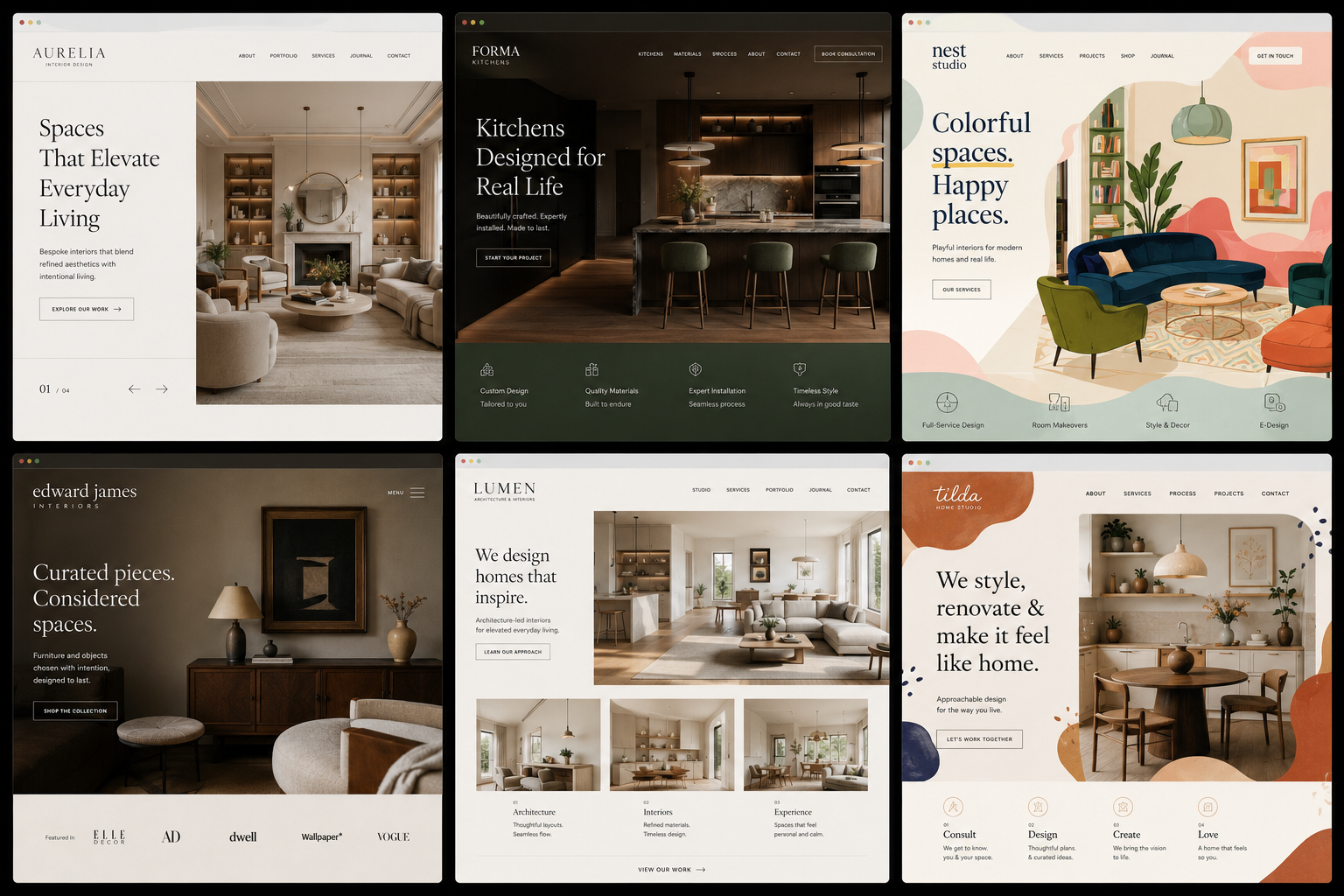
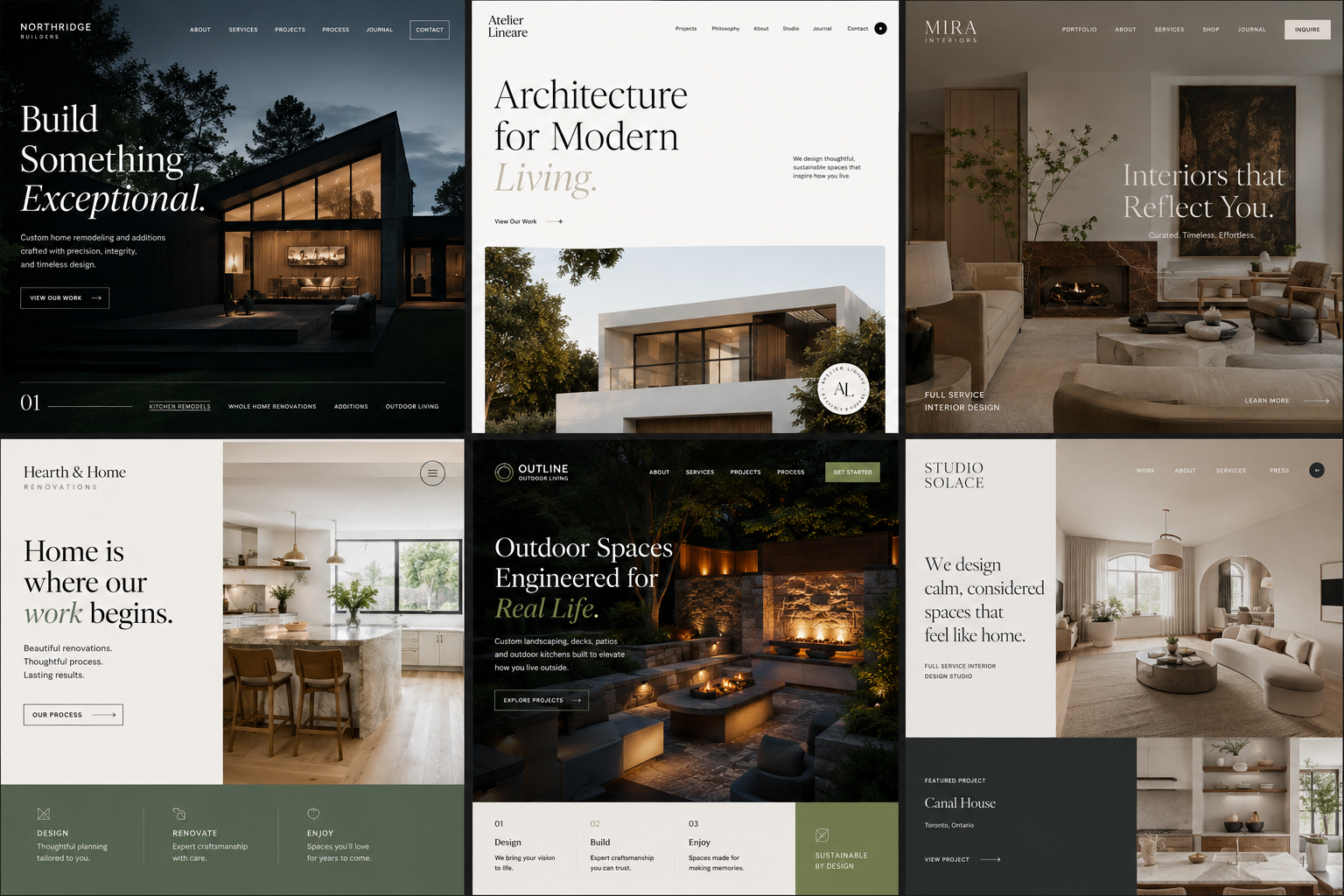
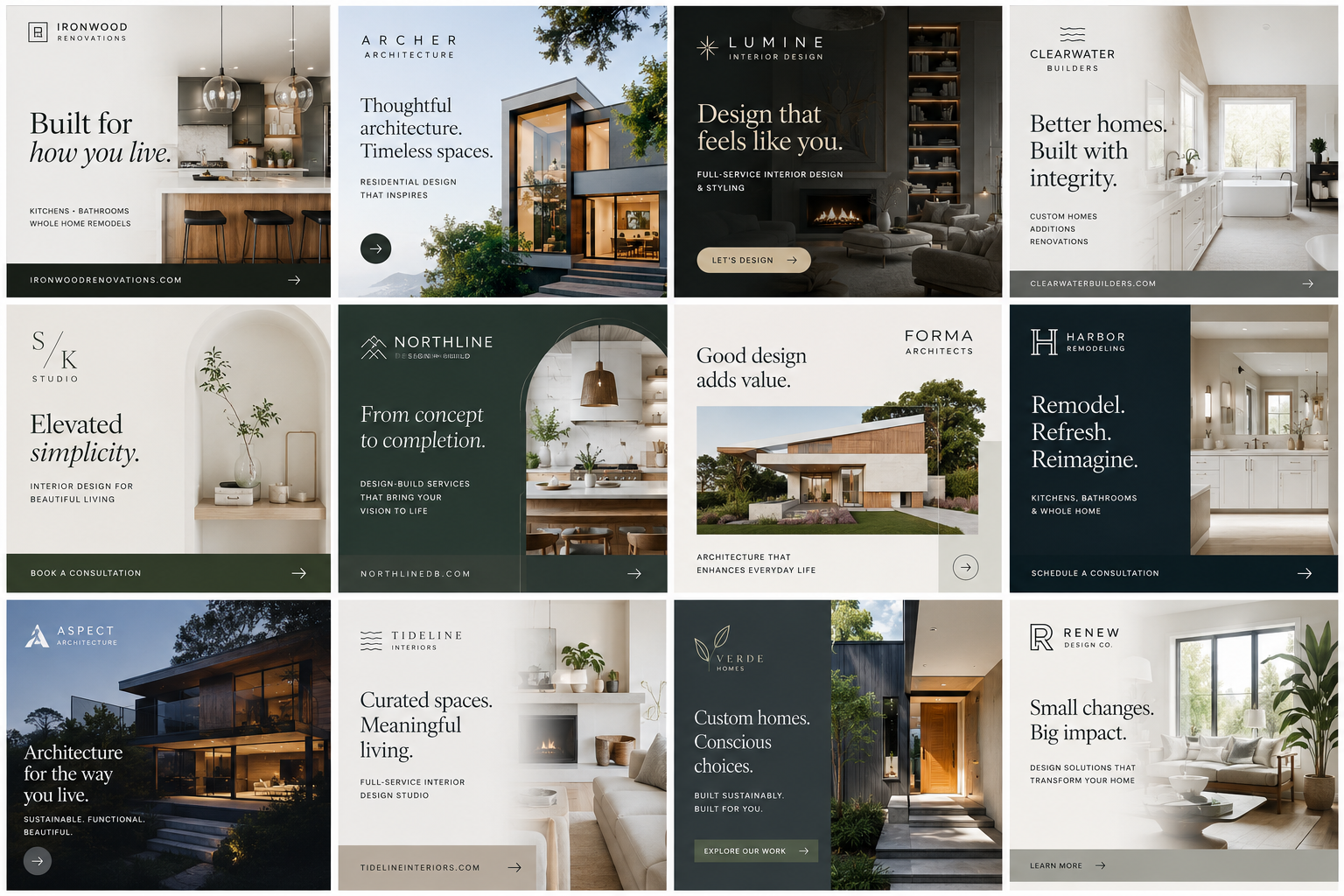
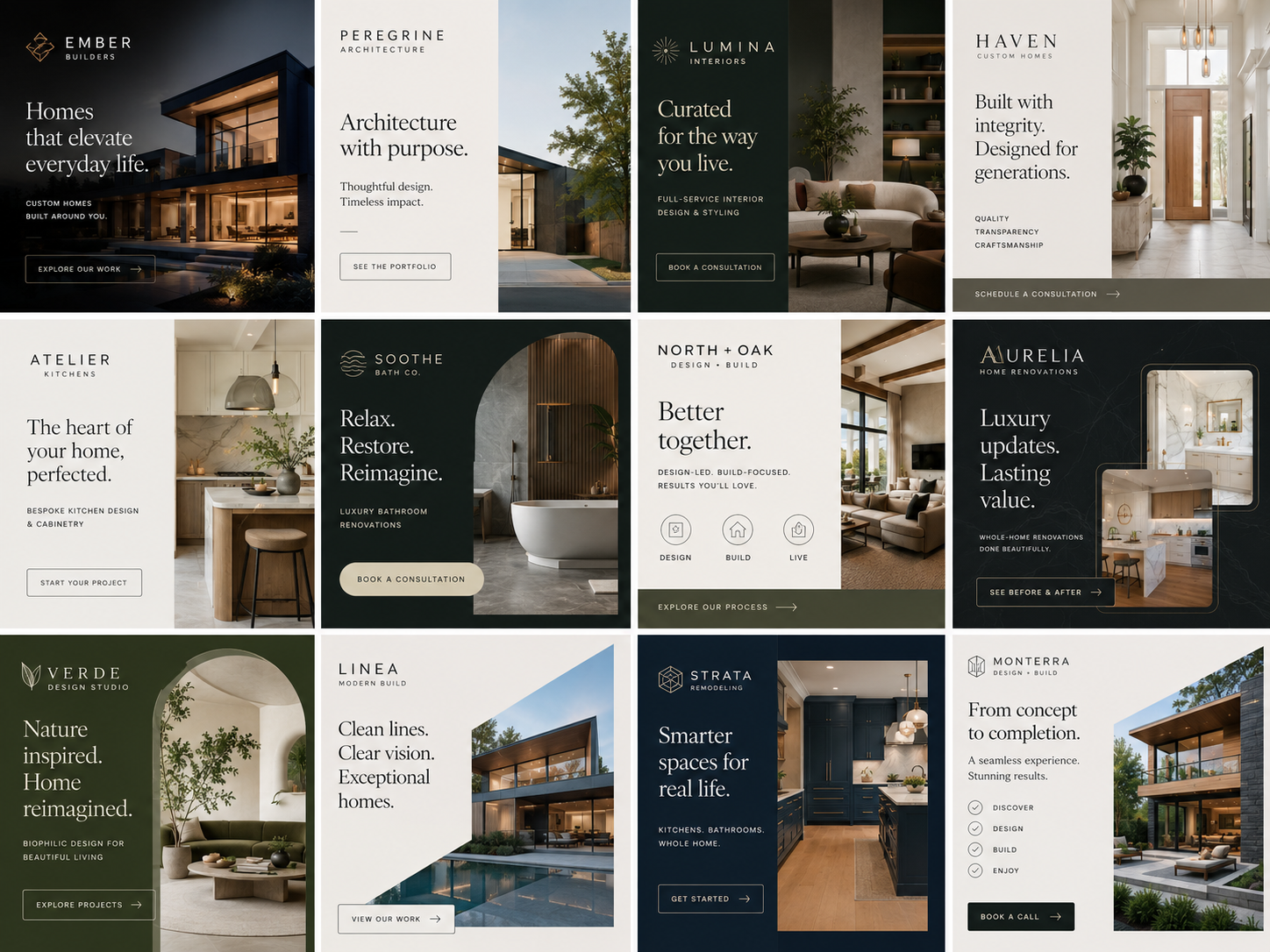
One project should become many assets
What stronger presentation could look like
These GYRO example tiles are not stock proof for Timeless. They are visual direction for how service pages, case studies, and repurposed social content can feel more organized and decision-friendly.
Do the foundational work before chasing more traffic.
Foundational and urgent
Remove footer placeholders
Why: credibility. First step: edit the global footer. KPI: no placeholder content remains on reviewed pages.
Standardize NAP and hours
Why: local trust. First step: confirm the official address, phone, and hours. KPI: matching information across site, GBP, BBB, and citations.
Verify tracking
Why: better decisions. First step: audit GA4, forms, calls, GBP, and CRM. KPI: qualified inquiry events configured.
Upgrade the intake form
Why: lead quality. First step: add service, city, scope, timeline, budget, upload, and referral fields. KPI: more complete lead records.
Conversion and authority
Build core service pages
Why: high-intent search and buyer clarity. First step: publish Kitchen Remodeling and Bathroom Remodeling pages. KPI: indexed pages and service-specific inquiries.
Rebuild Fountain and Colorado Springs pages
Why: local relevance. First step: add local proof, FAQs, service sections, and CTAs. KPI: local organic impressions and qualified inquiries.
Create case studies
Why: proof. First step: pick one kitchen and one bath project. KPI: case-study CTA clicks and assisted inquiries.
Add process and testimonials
Why: trust. First step: publish a verified process page and approved review snippets. KPI: contact-page engagement and consultation requests.
Scale carefully
Publish cost and timeline guides
Why: qualification. First step: gather internal pricing and schedule inputs. KPI: better project-fit conversations.
Start a GBP and review routine
Why: local proof. First step: post project updates and request reviews after jobs. KPI: review velocity and GBP actions.
Validate local associations
Why: authority and referrals. First step: assess chamber, HBA, and NKBA fit. KPI: relevant citations and referral mentions.
Test paid only after foundations
Why: avoid wasted spend. First step: run narrow service/city tests after tracking and pages are ready. KPI: cost per qualified inquiry.
One focused quarter can make the marketing system more usable.
Measurement and cleanup
Key actions: remove placeholders, standardize contact details, verify analytics and form/call tracking, audit GBP, confirm services and service areas.
Outputs: clean footer, tracking plan, intake form spec, baseline inquiry log, updated public business details.
Success signals: no obvious trust leaks, consistent NAP/hours, and qualified inquiry tracking ready to use.
Core pages and conversion path
Key actions: build kitchen, bathroom, custom cabinetry, Fountain, and Colorado Springs pages; update navigation; launch improved intake form; add process page.
Outputs: stronger service architecture, better page-to-form path, service-specific CTAs, and clearer consultation expectations.
Success signals: new pages indexed, form submissions include project type and city, and service pages begin assisting inquiries.
Proof and distribution
Key actions: publish one kitchen case study and one bathroom case study, add testimonials, begin GBP posting, repurpose projects for social, draft a cost/timeline guide.
Outputs: proof library, social/GBP content loop, review placement near CTAs, and a stronger sales-conversation aid.
Success signals: case-study views, CTA clicks, review requests sent, and better consult quality.
Risk guardrails
Do not mass-produce thin city pages across the entire Front Range. Do not publish unsupported cost promises. Do not claim unverified review totals. Do not run paid traffic into generic pages before tracking and lead qualification are in place.
Test changes that improve lead quality, not vanity metrics.
Project-fit intake form
Hypothesis: A remodel-specific form will improve lead quality without creating too much friction.
Change: Add service, city, scope, timeline, budget, photo upload, and referral source.
Service-specific CTAs
Hypothesis: “Plan Your Kitchen Remodel” and “Plan Your Bathroom Remodel” will outperform generic consultation language on service pages.
Track first: CTA clicks, form starts, and successful submissions by page.
Trust proof near the form
Hypothesis: Testimonials, BBB proof, and project imagery near the contact form will reduce hesitation.
Track first: form-start rate, form-completion rate, and call clicks from contact page visitors.
Fountain local proof block
Hypothesis: A richer Fountain page with local project examples and FAQs will improve engagement from local visitors.
Track first: local landing-page conversion events and Search Console query data.
Gallery-to-case-study path
Hypothesis: Inspiration visitors will take the next step more often when images link to full project stories.
Track first: gallery clicks, case-study views, CTA clicks, and assisted form submissions.
Mobile click-to-call bar
Hypothesis: A clear mobile call and consultation path will help high-intent users contact the business faster.
Track first: mobile call clicks, consultation CTA clicks, and call quality.
Budget range education
Hypothesis: Careful budget guidance will reduce poor-fit inquiries and improve consultation quality.
Track first: lead-to-consultation rate and project-fit notes in the CRM.
Process-first page module
Hypothesis: Showing the remodel process before the CTA will increase trust for high-intent visitors.
Track first: scroll depth, CTA click rate, and form-start rate on service pages.
Measure the numbers that tie back to right-fit projects.
For a remodeler, traffic is only useful when it produces qualified inquiries, real consultations, and eventually sold projects in the service areas and scopes you actually want.
| KPI | Required tracking | Why it matters | Review cadence |
|---|---|---|---|
| Organic landing pages | GA4 events plus Search Console page/query data | Shows which pages produce useful visibility and inquiries. | Monthly |
| Local-search actions | GBP calls, website clicks, direction requests, and service interactions | Shows whether local presence is creating action, not just impressions. | Monthly |
| Lead-to-consultation rate | CRM or lead spreadsheet with source and outcome tags | Separates raw lead volume from real sales opportunities. | Monthly |
| Consultation-to-project rate | CRM, estimate data, and sold-project notes | Connects marketing to actual project quality once internal data is available. | Monthly or quarterly |
Timeless needs an operating system, not random marketing tasks.
GYRO’s Megaphone system could help make this work repeatable by connecting the business story, service pages, local SEO, project proof, social content, Google Business Profile activity, reputation support, conversion improvements, and measurement into one coordinated system.
The first useful step would be a MOD, or Master Organization Document. That would capture your services, best-fit projects, local priorities, proof points, voice, differentiators, customer concerns, review themes, and project examples. Once that source document is right, the website, content, social, GBP, and measurement work can stay consistent.
Clarity
Define the service mix, service-area priorities, right-fit projects, and proof language before publishing more pages.
Proof
Turn real kitchen and bath projects into case studies, gallery cards, social sequences, GBP posts, FAQs, and sales aids.
Measurement
Track qualified inquiries, service requested, city, source, consultation bookings, and project fit so the marketing reflects the business reality.
What needs internal access before final decisions.
This was an outside-in audit.
The strongest observations here are based on public-facing website content, public business profiles, reviewed search samples, competitor websites, and visible conversion paths. Several important business questions require internal access before they should be treated as final.
Needed access: Google Analytics, Google Search Console, Google Business Profile, CRM or lead spreadsheet, call data, form plugin data, lead quality notes, close rates, revenue by service, ad accounts, review platform dashboards, customer research, sales-process data, project photo library, licensing documentation, insurance documentation, and warranty or follow-up policy.
This does not weaken the public findings around placeholder content, thin service architecture, inconsistent contact details, generic form fields, underused project proof, and the need for better service pages. It simply means the next round should connect the outside-in audit to real business outcomes.
Timeless has strengths worth amplifying.
The business already has a focused service category, local identity, BBB proof, veteran-owned language, visible contact information, and real project imagery. That is enough to build from.
The next step is not a complicated marketing overhaul. It is a focused 90-day cleanup and buildout: fix the trust leaks, measure the calls and forms, publish the core service pages, and turn real projects into proof. You can implement the recommendations independently. GYRO can also help connect the work through a MOD and Megaphone if you want a repeatable system instead of one-off tasks.