
JGuhl Construction
A practical outside-in audit for a Kiowa-based residential contractor with strong trust potential and an underdeveloped digital proof system.
The clearest opportunity is to turn real-world trust into clearer digital proof.
JGuhl Construction already has useful public credibility signals and a straightforward website. The next stage is not simply “more marketing.” It is making the business easier to understand, easier to trust, easier to find, and easier to contact with the right project information.
Credibility exists off the website.
Public signals include BBB accreditation with an A+ rating, a BuildZoom profile with positive reviews, contractor-registration references, and consistent phone and location information across several third-party profiles.
The official site is too thin for comparison shoppers.
The current site introduces the business, shows a gallery, and provides contact options, but it does not yet explain services, service areas, process, reviews, project types, or case-study proof in enough detail.
Build service pages around high-value work.
Kitchen remodeling, bathroom remodeling, additions, whole-home remodeling, decks and porches, new construction, and restoration all deserve clearer website support if they match the work JGuhl wants most.
Improve the inquiry path without making it difficult.
The form is easy to use, but it does not capture project type, location, timeline, budget range, or photos. A slightly stronger project-fit form would help the business qualify leads while keeping phone access simple.
Make Kiowa and nearby service areas clearer.
JGuhl has a Kiowa identity, but the website does not clearly define the broader service area or connect real project proof to nearby communities such as Elizabeth, Elbert County, Parker, Franktown, Castle Rock, or Douglas County.
Clarify, prove, track, then scale.
The recommended order is service-priority validation, homepage and trust proof improvements, analytics and conversion tracking, core service pages, project case studies, review workflow, and then selective promotion.
What JGuhl Construction already has going for it.
The public footprint shows the ingredients homeowners want in a contractor: trust, direct communication, visible work examples, and local presence. The opportunity is to organize those ingredients into a stronger buyer journey.
Third-party credibility
BBB accreditation, an A+ rating, and positive BuildZoom review signals give JGuhl more trust material than the current website uses.
Phone and email are easy to find
The site makes it simple for a motivated visitor to call or send a basic inquiry, which is important for contractor leads.
Existing project gallery
The gallery is a real asset. With captions, categories, before/after structure, and project stories, it could become much more persuasive.
Trust, communication, quality
The current message emphasizes trust, quality work, communication, budgeting, organization, and experience with occupied job sites.
Strategic thesis
JGuhl Construction appears to have the field credibility of a trusted local contractor, but its public marketing needs to make that credibility specific, searchable, visual, and easier for homeowners to act on.
The message is pointed in the right direction, but it needs more specificity.
The current public positioning centers on “Building Trust with Quality Work.” That is appropriate for a residential contractor, but homeowners also need to understand exactly what JGuhl builds, where the team works, what the process feels like, and why the business is a safe choice for a meaningful home project.
Current market fit
Based on the public website and third-party profiles, JGuhl appears best suited to homeowners in Kiowa, Elbert County, and surrounding Front Range communities who want a trustworthy contractor for remodels, additions, decks, restorations, or new construction.
Likely high-value work includes kitchens, bathrooms, whole-home remodeling, additions, decks and porches, new construction, and multi-phase occupied-home projects. Custom cabinets, metal buildings, siding, and rural outbuildings may also be opportunities, but those should be validated internally before being elevated on the site.
The strongest customer concerns to address are straightforward: Will the contractor show up? Will the quote be clear? Can they work in an occupied home? Will communication be steady? Are there examples similar to my project?
A qualitative view of the current foundation.
This scorecard is directional and based on public information. It is not a substitute for analytics, Search Console, Google Business Profile data, call data, or CRM lead-quality reporting.
What should change, why it matters, and what to do first.
Make the first screen more specific.
Observed: The site leans heavily on “Building Trust with Quality Work.” That is a strong theme, but it repeats and does not immediately state the exact service mix or local relevance.
Why it matters: A homeowner comparing contractors needs fast confirmation that JGuhl handles their project type and works in their area.
Next step: Rewrite the hero around residential remodeling, additions, decks, new construction, and Kiowa-area service, then support it with trust proof.
Move beyond a thin single-page site.
Observed: The official site appears to function mostly as a one-page brochure with broad copy, a gallery, and a contact form.
Why it matters: High-intent visitors often search for specific services such as kitchen remodel, bathroom remodel, deck builder, home addition, or custom home builder.
Next step: Build core pages for the services JGuhl truly wants to sell, starting with the highest-value and most proven categories.
Validate the technical foundation before scaling content.
Observed: HTTPS is present, but robots, sitemap, canonical tags, structured data, measured performance, and analytics tagging were not fully verifiable from the outside.
Why it matters: Content work is strongest when search engines can crawl it, users can load it quickly, and the business can measure what happens.
Next step: Run a site crawl, PageSpeed/Lighthouse review, schema validation, and analytics-event verification during the website update.
Create content that matches how homeowners search.
Observed: Third-party profiles carry more service detail than the official website. No dedicated service, location, process, FAQ, or case-study pages were found.
Why it matters: Search engines and AI-assisted search systems need crawlable, specific, corroborated content to understand services, geography, and proof.
Next step: Build a residential remodeling hub, priority service pages, an areas-served hub, and project case studies with real local detail.
Clean up the public entity picture.
Observed: Public sources use JGuhl Construction, JGuhl Construction LLC, and J Guhl LLC. Phone and Kiowa location signals appear consistent, but current GBP details were not reliably available.
Why it matters: Consistency helps homeowners and search systems connect the business name, service category, phone, location, and proof signals.
Next step: Manually audit the Google Business Profile, citations, category choices, service list, service area, photos, review links, and naming conventions.
Use trust proof closer to the decision point.
Observed: BBB and BuildZoom provide public reputation proof, but the website does not appear to have a dedicated review section or service-specific testimonials.
Why it matters: Residential construction decisions are high-trust decisions. Reviews, accreditation, and project proof should appear near calls to action.
Next step: Add a review/proof section and create a post-project review-request workflow.
Turn gallery images into selling assets.
Observed: The website has a project gallery, but the images do not appear to be organized with project names, locations, scopes, before/after structure, or homeowner goals.
Why it matters: Images prove craftsmanship, but captions explain relevance. A similar project story can help a homeowner move from browsing to inquiry.
Next step: Convert the best projects into captioned galleries and three initial case studies.
Ask a few better questions.
Observed: The current form appears to request name, email, and phone. It is low-friction but low-information.
Why it matters: Better lead intake helps the business separate strong-fit projects from small, out-of-area, or low-priority inquiries.
Next step: Add project type, city or ZIP, ideal timing, optional budget range, project notes, and photo or plan upload.
Track business outcomes, not just activity.
Observed: Public access did not confirm GA4, Tag Manager, form events, call tracking, conversion events, CRM integration, or ad pixels.
Why it matters: The important question is not just whether traffic grows. It is whether the site produces qualified conversations for the right services and locations.
Next step: Verify analytics, Search Console, form-submit events, click-to-call events, lead-source capture, service-request tracking, and CRM tags.
Make the business easier for AI systems to understand.
Observed: Third-party corroboration exists, but the official website is not yet the strongest source of truth for services, areas, proof, and differentiators.
Why it matters: AI-assisted answers tend to favor clear entity information, consistent third-party proof, helpful content, and structured service/location signals.
Next step: Add LocalBusiness or Contractor schema, Service schema, FAQ schema, review proof, case-study content, image context, and consistent NAP language.
Important validation note
Licensing, insurance, registration, liability certificate language, code-compliance statements, and warranty claims should be validated internally before they appear in public marketing copy. The audit found useful public references, but those should not be turned into legal claims without confirmation.
Different visitors need different proof.
The website currently works best for someone who already knows JGuhl and simply needs the phone number. It is weaker for visitors who are comparing contractors or browsing project ideas.
“I heard about JGuhl. Is this the right company?”
This visitor needs fast confirmation, trust proof, service area, and a clear next step.
- Add BBB and review proof near the top.
- Show service area and project types clearly.
- Explain what happens after they call or submit the form.
“Who should I trust with my remodel?”
This visitor needs service-specific proof, similar projects, process clarity, and reasons to choose JGuhl over another contractor.
- Create kitchen, bath, addition, deck, and remodeling pages.
- Add case studies and project captions.
- Use project-fit CTAs rather than generic “send” language.
“I am getting ideas and planning.”
This visitor may come from social, images, a gallery, or local research. They need visual ideas, planning help, and a reason to return.
- Turn projects into before/after stories.
- Add planning FAQs around budgets, timelines, and occupied-home remodeling.
- Repurpose each strong project into website, GBP, and social content.
Trust gaps to close
Process explanation, team or owner visibility, project-scope examples, project-location examples, timeline context, budget guidance, before/after proof, warranty or follow-through information, and testimonials near decision points are either missing, weak, or not publicly verifiable.
Form-friction recommendation
Keep the form approachable, but add the fields that help qualify a real project: project type, city or ZIP, desired timing, optional budget range, notes, referral source, and photo or plan upload. Watch qualified submissions, not just raw form volume.
The local competitive opening is trust plus clarity.
The reviewed competitor set includes local contractors, broader general contractors, a kitchen and bath specialist, and more polished custom-home builders. This is not a winner ranking. It is a practical look at how JGuhl can stand out.
| Competitor | What they appear to do well | Opening for JGuhl |
|---|---|---|
| Patriot Contracting | Clear Kiowa positioning around custom homes, renovations, additions, kitchens, bathrooms, decks, and surrounding service areas. | JGuhl can compete by making its own trust proof, process, and project stories more visible. |
| D&G Construction | Local Kiowa presence, broader navigation, and visible pages for remodeling and construction services. | JGuhl can be more homeowner-specific and proof-driven with richer case studies and conversion content. |
| J.D. Homes Inc. | Clear service navigation for general contracting, additions, custom homes, decks, framing, siding, and county-level positioning. | JGuhl can lean into occupied-home remodeling, communication, and organized project management. |
| Henderson Home Builders | Strong custom-home positioning, team story, testimonials, cost guide, learning center, and polished conversion paths. | JGuhl can stay more local and practical while adopting clearer proof, process, and education assets. |
| ECC Kitchen & Bath | Specialized Elizabeth-area kitchen, bath, basement, showroom, product, and design-center positioning. | JGuhl can present broader construction depth while still creating stronger kitchen and bath service pages. |
| Arnett Front Range Construction | Service breadth, quote steps, reviews, FAQs, local showcases, and practical remodeling content. | JGuhl can combine higher-trust contractor credentials with clearer high-value project focus. |
Competitive opening in plain English
Many nearby contractors either look broad but thin, specialized but narrow, or polished but less local. JGuhl can occupy the middle: a trusted local contractor with enough proof, process, and project clarity to feel safe for meaningful residential work.
Build a content system around real services, real places, and real projects.
In the reviewed search sample, JGuhl surfaced for branded and some directory-supported searches, but the official website did not appear to have enough service-specific content to compete strongly for high-intent non-branded terms. Results vary by device, location, and personalization, so this should be validated with Search Console and local rank tracking.
| Opportunity | Recommended asset | Why it matters | CTA or success signal |
|---|---|---|---|
| Residential remodeling | Main remodeling service page | Core category that can organize kitchens, baths, additions, whole-home work, and restoration. | Request a remodel consultation |
| Kitchen remodeling | Kitchen remodel page plus project case study | High-value search intent with strong need for visual proof and budget/process reassurance. | Start your kitchen conversation |
| Bathroom remodeling | Bathroom remodel page plus FAQ | Common homeowner search intent that benefits from timeline, disruption, and material guidance. | Tell us about your bathroom |
| Additions and whole-home remodeling | Complex-project service page | Higher-ticket work requires process clarity, design coordination, permits, budgeting, and proof. | Schedule a project-fit call |
| Decks and porches | Decks and porches page with gallery captions | Competitors and specialists have dedicated pages. JGuhl should support this only if the service is strategic. | Request a deck estimate |
| Service areas | Areas-served hub | Kiowa is clear, but nearby communities need authentic local proof rather than thin duplicate city pages. | See if we work in your area |
| Project proof | Monthly case-study system | One good project can support website proof, service-page content, social, GBP, FAQs, and sales conversations. | Publish one complete project story per month |
| Planning education | Budget, timeline, occupied-home, and permit FAQs | Helpful content reduces anxiety and helps search systems understand expertise. | Track FAQ views and assisted inquiries |
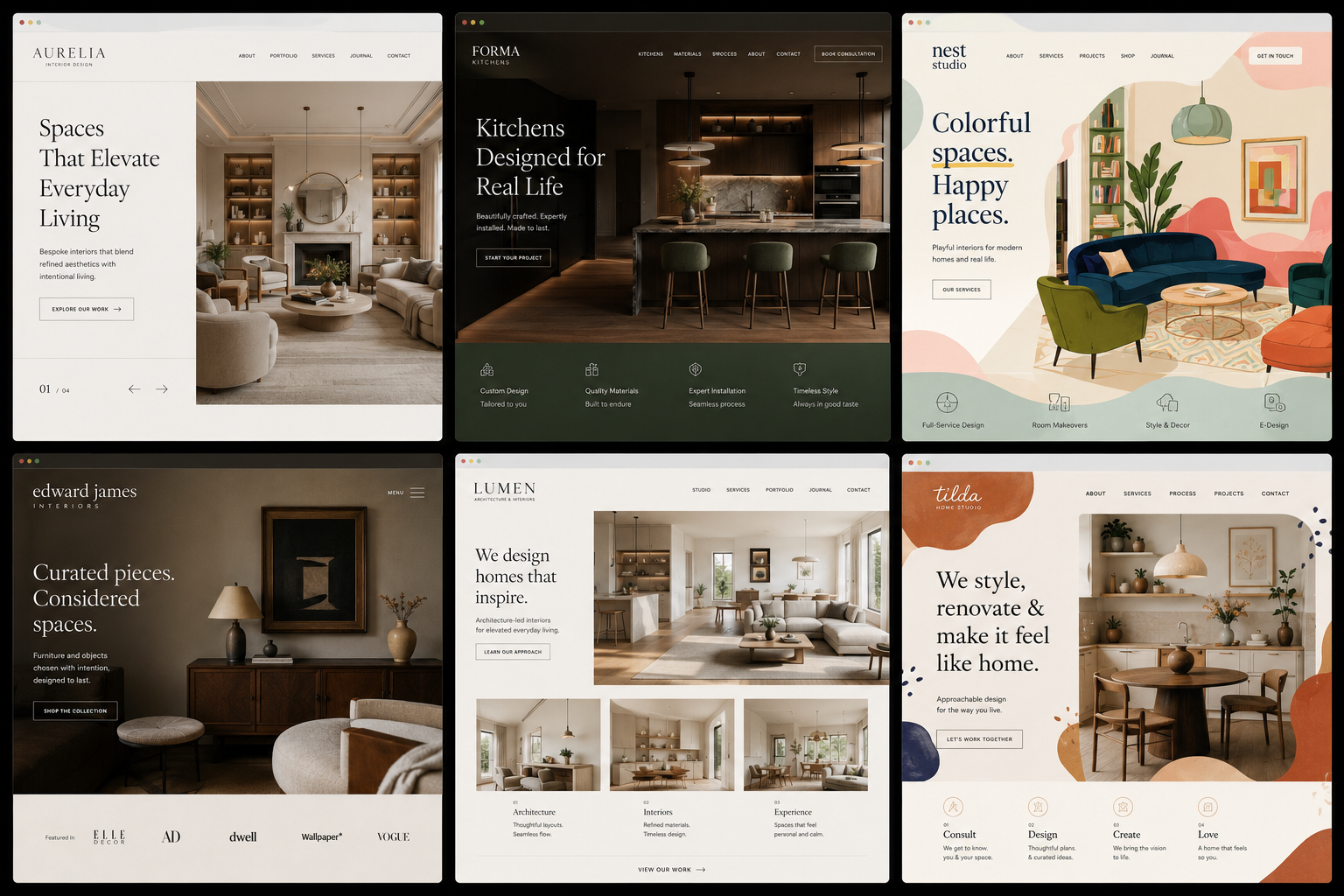
A stronger website system can make service pages, project proof, and calls to action easier to follow.

Project visuals work harder when they connect to service categories, proof, and a clear next step.

A single project can become a social sequence rather than a one-off gallery upload.

Social content should point back to useful website destinations, not live in isolation.
Prioritize foundation before aggressive traffic growth.
The strongest sequence is to clarify the offer, improve trust proof, capture better lead information, and measure qualified inquiries before investing heavily in paid traffic or broad content scaling.
Now
Next
Later
A sensible sequence for the next three months.
First 30 days: clarity and measurement
Validate service priorities, manually audit GBP, verify analytics and Search Console, configure form and call tracking, rewrite the homepage hero, add validated trust proof, and improve the contact form.
Outputs: service-priority brief, tracking plan, updated homepage copy, project-fit form, and trust proof block.
Watch: event data quality, CTA clicks, form starts, qualified lead fields, and common sales questions.
Days 31–60: service and proof assets
Build priority service pages, add a process page, add review proof, prepare two case studies, and create an areas-served hub that uses real geography and proof.
Outputs: service pages, process page, review section, case studies, and service-area content.
Watch: indexation, service-page engagement, inquiry source, requested service, and city or ZIP.
Days 61–90: reputation and content rhythm
Launch the review-request workflow, publish a third case study, start a practical GBP and social cadence, add FAQ content, and consider a narrow paid test only if tracking works.
Outputs: review SOP, monthly content workflow, FAQ set, repurposed social and GBP posts, and a paid-test brief if ready.
Watch: review velocity, organic impressions, qualified conversations, and lead-to-consultation rate.
Test the practical changes that should improve lead quality.
These are experiments, not guaranteed winners. They should be tested only after basic tracking is configured.
| Experiment | Hypothesis | Primary metric | Track first |
|---|---|---|---|
| Specific hero vs. generic trust hero | A service and location-specific headline will help visitors understand fit faster. | CTA click rate | Hero CTA clicks and scroll depth |
| Project-fit form | A few qualifying fields will improve lead quality without discouraging strong-fit projects. | Qualified submissions | Form starts, field completion, and submissions |
| Trust proof near the form | Reviews and BBB proof near conversion points will reduce hesitation. | Form completion rate | Form submit and click-to-call events |
| Service-specific CTA language | “Discuss your kitchen remodel” should feel more relevant than generic “send” language. | Service-page conversion rate | Landing-page and service-request attribution |
| Gallery captions | Project captions will make visual proof more persuasive and searchable. | Gallery engagement | Image/gallery interactions and assisted conversions |
| Process reassurance block | Explaining next steps will reduce anxiety and increase form starts. | Form starts | Scroll depth and form-start events |
| Review-request timing | Requesting reviews after completion and follow-up will improve review velocity. | New reviews per month or quarter | Review requests sent and review responses |
| Case-study assisted conversion | Project stories will help comparison visitors become qualified leads. | Case-study assisted inquiries | Case-study page visits and inquiry source |
Measure qualified conversations, not just traffic.
The goal is to understand which services, locations, pages, and proof points produce strong-fit opportunities. Website activity matters, but business-outcome metrics matter more.
Qualified inquiries
Track leads that match service area, project type, timing, and minimum-fit criteria. Review weekly and monthly.
Consultation bookings
Measure which inquiries become scheduled conversations or site visits. This is more useful than raw form volume alone.
GBP actions
Track calls, website clicks, direction requests, photos, posts, Q&A, and review activity once GBP access is available.
| KPI | Definition | Required tracking | Why it matters |
|---|---|---|---|
| Calls | Click-to-call and manually logged phone inquiries. | Click events or carefully configured call tracking. | Contractor leads often convert by phone. |
| Form submissions | Completed project inquiry forms. | GA4 event and confirmation page or event. | Baseline website conversion signal. |
| Service requested | Kitchen, bath, addition, deck, whole-home, new construction, or other. | Form dropdown and CRM tags. | Shows which services marketing is actually attracting. |
| Geography | City, ZIP, or project area. | Form field and CRM field. | Validates service-area strategy and local content. |
| Organic landing pages | Pages that attract organic visits and leads. | GA4 and Search Console. | Shows which service and education pages are working. |
| Review velocity | New reviews and response rate by platform. | Review tracker and platform monitoring. | Strengthens trust and local-search credibility over time. |
| Lead-to-consultation rate | Qualified leads that become scheduled conversations. | CRM status tracking. | Connects marketing to real sales activity. |
| Consultation-to-project rate | Consultations that become won projects. | CRM or job-management data. | Helps prioritize profitable services and channels. |
A coordinated system could make this repeatable.
JGuhl’s opportunity is not one isolated tactic. The business needs a clearer source of truth, stronger website structure, better project proof, local-search consistency, review momentum, practical conversion tracking, and a content rhythm that does not depend on starting from scratch every time.
A GYRO Master Organization Document could help capture the services, story, differentiation, customers, proof, voice, local relevance, and project-fit criteria. Megaphone could then provide the operating system for turning that strategy into website content, SEO and GEO support, social content, Google Business Profile activity, review support, conversion improvements, and monthly refinement.
What this outside-in audit could not verify.
The audit is based on public information and should be strengthened with internal access before major spending decisions. These limitations do not erase the supported findings; they simply identify what should be checked next.
Internal access needed
Google Analytics, Search Console, Google Business Profile, CRM data, call data, form submissions, lead quality, close rates, revenue by service, ad accounts, customer research, and sales-process notes would make the next plan sharper.
Do not overstate unavailable data
Current Google review count, map-pack rankings, exact traffic, conversion rate, PageSpeed scores, ad spend, and live GBP performance were not reliably available. They should not be treated as zero or used as performance claims.
JGuhl has strengths worth amplifying.
The practical next step is to convert real-world trust into a clearer digital presence: specific service pages, stronger proof, better lead qualification, and measurement that shows what is working. These recommendations can be implemented independently, and GYRO can also help connect them through a MOD and Megaphone if a coordinated system would be useful.