
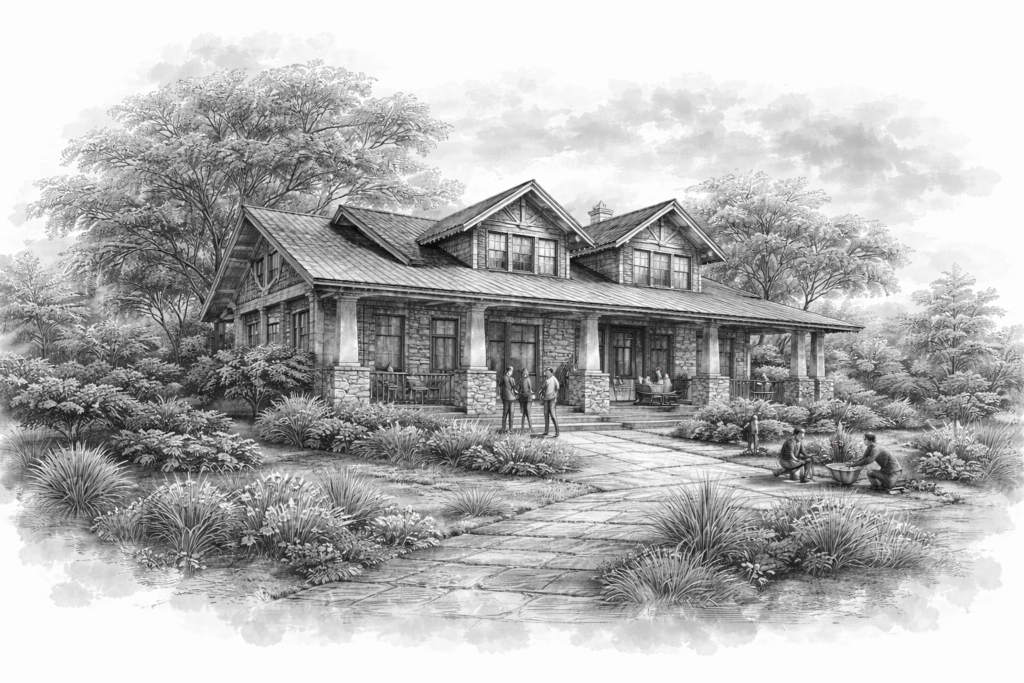
Great design can be hard to explain in a sentence. A homeowner might love the final photos, but still wonder: “Can this person handle my project, my budget, and my timeline?”
That is exactly why design case studies matter. They turn “nice work” into proof. They show how you think, how you lead the process, and how you get results that clients feel every day.
This guide breaks down a simple, repeatable way to write case studies using creative storytelling that supports interior design marketing, strengthens your portfolio, and helps you win better-fit projects without adding marketing chaos.
Why Case Studies Matter for Designers and Architects
Case studies are more than a portfolio page. They are a sales asset that builds trust before the first call. Instead of asking a prospect to “imagine what you can do,” you show them a real example that removes doubt.
- They build credibility fast: a clear story beats a gallery of pretty photos.
- They justify premium fees: process and outcomes explain value, not just aesthetics.
- They attract better-fit clients: prospects self-qualify when they see how you work.
- They shorten the sales cycle: fewer “what do you do exactly?” conversations.
- They create content you can reuse: one case study can fuel posts, reels, emails, and proposal links.
If you already have strong visuals, case studies are how you turn them into booked consults.
What Makes a Case Study Actually Persuasive
A case study is not a long essay. It is a guided tour of the project that answers the questions a buyer is already thinking.
The core questions your case study should answer:
- → What problem were we solving? The client’s challenge in plain English.
- → What did we do and why? The decisions behind the design, not just the outcome.
- → What changed? Measurable results where possible, plus clear “before vs after” impact.
- → What is the proof? Client quotes, photos, drawings, or any meaningful artifacts.
- → Who is this project for? Help the right next client see themselves in the story.
Tip: If a sentence does not reduce doubt or increase trust, cut it.
The Simple Case Study Framework That Works (Challenge – Process – Outcome)
If you want a case study that sells expertise, keep the structure predictable. Clients should feel guided from start to finish.
-
Start with the client challenge
Describe the space, constraints, and goals. Keep it human. Examples: “dark kitchen with poor flow,” “small bath with no storage,” “client wanted modern warmth without feeling sterile.” -
Explain your role and scope
What did you own? Concept, space planning, selections, drawings, project management, procurement, styling. Clarity here prevents misunderstanding. -
Show your process in 3 to 6 moves
Break the project into simple decisions: layout change, lighting plan, material palette, storage strategy, details, install. This is where expertise becomes visible. -
Document the outcome
Use finished photos and highlight what changed. Add specifics when you can: “added pantry wall,” “improved clearance,” “increased usable storage,” “reduced visual clutter.” -
Close with proof and next steps
Add a testimonial, a quick “what we learned,” and a CTA. Invite the right type of client to book a consult or view your portfolio.
How to Track Results Without Getting “Too Marketing”
Design results are not always numbers. But you can still show outcomes clearly. The goal is to make the improvement obvious and believable.
|
Before and After Proof
What to capture: Before photos, demo shots, progress photos, and final images.
Why it sells: Buyers believe transformation when they can see it. |
|
Functional Wins
What to capture: layout diagrams, storage improvements, lighting plan changes, traffic flow fixes.
Why it sells: It shows you solve real-life problems, not just style rooms. |
|
Decision Rationale
What to capture: 2 to 4 “why we chose this” decisions (materials, finishes, fixtures, details).
Why it sells: It demonstrates taste plus judgment, which is what clients pay for. |
|
Client Voice
What to capture: a short quote about the experience, comfort, usability, and the final feeling.
Why it sells: Social proof closes the trust gap. |
Write the Story Like a Human (Not Like a Brochure)
The best case studies read like a clear conversation. They are specific, honest, and focused on outcomes the client cares about.
Simple writing rules that keep your case studies strong:
- Use plain language: “We opened the kitchen to improve flow” beats jargon.
- Keep the “why” short: 1 to 2 sentences per major decision is usually enough.
- Show constraints: budgets, timeline, existing conditions. Constraints make you look more skilled, not less.
- Do not hide collaboration: If you worked with a builder or trades, say it. It adds credibility.
- Anchor the story to a real person: “They host family weekly” or “They needed calm mornings” helps prospects connect.
If you want a stronger storytelling approach that stays practical, this pairs well: Storytelling to Sell Remodeling Services.
Where to Publish Case Studies So They Drive Leads
A case study only sells if people can find it. Treat your best stories as “always-on proof” and distribute them in a few high-impact places.
Smart publishing targets:
- → Your website: Add a case study library or add case studies to key service pages.
- → Your portfolio page: Link each project tile to a deeper case study write-up.
- → Instagram and reels: Turn each case study into a 3 to 5 slide story or a short video.
- → Email follow-up: Send one relevant case study after a discovery call.
- → Proposals: Drop links to 1 to 2 case studies that match the prospect’s project type.
If your site needs stronger proof presentation, these resources can help your case studies land better:
Project Portfolios That Win Clients
Portfolio Page Design Best Practices
Common Case Study Mistakes That Cost You Good Projects
Avoid these, and your case studies will convert more consistently:
- → Only posting final photos: Beautiful, but it does not prove expertise.
- → No clear problem statement: If the challenge is unclear, the win feels unclear too.
- → Too many details: Pick the 3 to 5 decisions that mattered most.
- → No client proof: Even one short quote makes the story more believable.
- → No next step: Always include a CTA so interested prospects know what to do.
If you want a remodel-focused reference for structuring proof, this is a useful companion: Case Studies for Remodelers.
How GYRO Helps Creative Professionals Turn Work Into Consistent Demand
GYRO is a growth platform built for remodelers and home-improvement brands that want steady demand without building a big marketing team. That same system helps creative professionals turn great projects into a repeatable pipeline of proof.
What this looks like in practice:
- Strategy oversight: so your case studies sound premium, accurate, and aligned with the projects you want more of.
- AI-assisted content production: so you publish consistently without spending weekends writing.
- SEO-aligned articles and content: so your expertise is discoverable when homeowners search.
- Repurposing into social: so one case study becomes multiple posts that build authority.
If you want to explore proof-first positioning for creatives, these two are strong next reads:
Marketing for Interior Designers
Building a Portfolio That Converts Design Prospects
Want Case Studies That Win Better Clients?
Case studies help the right clients trust you faster and understand your value without extra explanation.
If you want help building a simple case study system you can reuse across your website, portfolio, and socials, GYRO can help you do it with clarity and consistency.
Key Takeaways
Case Studies Turn Good Design Into Clear Proof
- A strong case study answers buyer questions: the problem, your process, the outcome, and proof.
- Use a consistent structure: challenge, scope, key decisions, outcome, testimonial, next step.
- Track results in practical ways: transformation photos, functional wins, and client quotes.
- Publish case studies where they drive action: website, portfolio, social, email, and proposals.
- Keep it plain English. If it reduces doubt, it stays. If it is fluff, it goes.
The compounding effect comes from consistency: one great case study each month can build a library that keeps selling your expertise year-round.