
Bear Creek Design + Build
A practical outside-in growth audit for a Colorado Springs design-build remodeler with a strong foundation in kitchens, baths, outdoor living, adaptable living, and residential elevators.
TL;DR
Bear Creek Design + Build already has the raw ingredients of a stronger local growth engine. The clearest opportunity is not to look more like every other kitchen-and-bath remodeler. It is to make the company’s design-build process, accessibility work, veteran-focused modifications, and elevator capability easier to find, trust, and act on.
A broader offer than a typical remodeler
Bear Creek is not only presenting kitchen and bath remodeling. The site also points to decks and outdoor living, design and planning, adaptable living, veteran and disabled modifications, and residential elevators.
Digital proof is thinner than the service mix
The reviewed pages show service intent, testimonials, and process language, but not enough project-specific proof: before-and-after stories, scope notes, timelines, budgets, locations, and outcome detail.
The veterans page deserves prompt updating
The adaptable-living page is one of the strongest differentiators, but the research packet found stale VA grant figures. That page should be updated first because it supports a high-trust, high-stakes service line.
The lead path exists, but it asks for a lot
Your website makes it possible to call, request an estimate, or schedule a phone consultation. The contact form appears heavier than it needs to be for a first inquiry, especially on mobile.
Colorado Springs relevance is real
The site already uses Colorado Springs language. The next step is stronger locality: a complete verified NAP footprint, service-area clarity, local case studies, review proof, and service pages that answer specific homeowner questions.
Fix trust, pages, tracking, then traffic
The right order is foundation first: update key content, repair or republish thin or inaccessible pages, simplify lead capture, build a review engine, and add measurement before scaling PPC.
What Bear Creek Already Has Going For It
There is a useful foundation here. Bear Creek’s website already gives a homeowner several reasons to keep reading: a design-build model, a wide service mix, long experience, project-management language, and a specialty niche that many remodelers do not have.
Clear design-build framing
The website repeatedly presents Bear Creek as a single coordinated team for design, planning, and construction. For a homeowner, that can reduce fear around handoffs, communication gaps, and scope confusion.
Accessibility and elevator capability
The strongest strategic advantage is the mix of mainstream remodeling with adaptable living, veteran and disabled modifications, and residential elevators. That gives Bear Creek a more specific lane than “general remodeler.”
Experience and project management
The site points to more than 35 years of experience, project management, a client portal, and help with finish selections. Those are valuable signals for bigger remodeling decisions.
On-site testimonials
The reviewed pages include named testimonials praising communication, design creativity, cleanup, timely responses, integrity, and finished quality. That is a good start; the next step is tying proof to actual projects.
Upper-midmarket positioning
Luxury-oriented bathroom and elevator language, finish-selection support, and trade-partner references suggest Bear Creek is better positioned as a premium or upper-midmarket remodeler than a price-led outfit.
A local audience that fits the offer
Colorado Springs has a meaningful homeowner base, a large veteran population, and enough regional construction activity to support a focused remodeling growth plan.
The main point
Bear Creek does not need to invent a new business. The work is to make the existing strengths more visible, more specific, and easier for right-fit homeowners to believe before they ever speak with your team.
Market Position and Customer Fit
Bear Creek’s best market position is broader than kitchen and bath remodeling, but it should not feel broad in a generic way. The strongest lane is thoughtful Colorado Springs design-build remodeling for beauty, function, mobility, and long-term livability.
The target customer picture is fairly distinct. A kitchen visitor is likely thinking about entertaining, cooking, layout, and resale. A bathroom visitor is thinking about comfort, finish quality, privacy, and daily use. A deck or outdoor-living visitor is thinking about Colorado lifestyle. An adaptable-living or elevator visitor is thinking about independence, safety, aging in place, disability support, or veteran-related funding.
That means Bear Creek’s website should not speak to one generic “homeowner.” It should guide several high-intent homeowners toward the right proof. The person considering a residential elevator needs a different level of trust than the person comparing tile options for a bathroom. The veteran researching accessibility modifications needs current, careful information. The kitchen buyer needs project visuals and confidence that the team can manage design decisions, budget expectations, and disruption.
The local market context supports that direction. The research packet identified Colorado Springs as a city with an estimated population of 494,743, 52,224 veterans, a 10.2% under-65 disability share, a 60.9% owner-occupied housing rate, and a median owner-occupied home value of $452,600. Median household income was reported at $84,818. Those signals do not guarantee demand, but they do point to a real pool of homeowners who may be able to invest in livability, comfort, and property improvements.
What this means commercially
The highest-value version of Bear Creek’s marketing is not “more traffic” in the abstract. It is better-fit inquiries from homeowners who understand the level of work, trust the process, and can see why Bear Creek is a better match for complex or higher-consideration projects.
Outside-In Marketing Scorecard
This scorecard is directional. It is based on public-facing observations in the research packet, not internal analytics, CRM data, call recordings, close rates, revenue by service line, or actual Google Business Profile access.
Brand and positioning
Design-build and specialty services are visible, but the most differentiated story could be sharper.
Service breadth
Kitchens, baths, decks, design planning, adaptable living, and elevators create a strong offer mix.
Website structure
The core navigation makes sense, but several linked pages were not retrievable in the research session.
Service-page depth
Service pages exist for key categories, but they need more local proof, project detail, and conversion guidance.
Local SEO foundation
Colorado Springs relevance appears repeatedly, but complete public address and service-area clarity need validation.
Reviews and reputation
Testimonials are useful. Public aggregate review rating, count, and recency were not verifiable in the reviewed data.
Portfolio and case studies
The biggest proof gap is the lack of accessible, project-specific before-and-after case studies.
Conversion path
Phone, estimate, contact, and consultation options exist, but the first-step form appears too heavy.
Measurement readiness
No analytics baseline was available in the public packet. Tracking should come before scaling campaigns.
AI-search and GEO readiness
The entity is understandable, but proof, structured content, consistent NAP, and third-party corroboration should be strengthened.
Detailed Digital Audit
The website already gives homeowners a way to understand what Bear Creek does. The next level is making every important page function like a proof asset: clear service, clear location, clear process, clear project fit, clear next step.
| Page or section | Observed role | Current strength | Friction or gap | Recommended next step |
|---|---|---|---|---|
| Home | Core service overview, experience, trade partners, process cues, testimonials, CTAs. | Strong overview page with clear remodeling categories. | Needs more direct routing into project proof and service-specific next steps. | Add featured case studies, service cards with proof, and clearer paths by project type. |
| Kitchens | Kitchen remodeling service page for Colorado Springs homeowners. | Design-build process and communication benefits are present. | Copy appears generic; no visible case-study depth in the reviewed data. | Add before/after projects, scope notes, budget drivers, timeline expectations, and local proof. |
| Bathrooms | Bathroom remodeling service page with upscale/lifestyle framing. | Premium tone fits higher-consideration remodeling. | Needs more concrete proof, project types, and decision guidance. | Build a bathroom page around examples, materials, planning questions, and right-fit CTA. |
| Veterans / Disabled | Adaptable living, VA-related grants, mobility and independence positioning. | One of the strongest differentiators on the site. | Grant figures were found to be stale against the current figures in the research packet. | Update grant content, add careful qualification notes, and include recent local accessibility examples. |
| Residential Elevators | Residential elevator design and installation, aging-in-place and disability support. | Distinctive niche capability with high trust potential. | Needs more integration proof: where elevators fit, what planning involves, and example outcomes. | Create an elevator planning guide and project-story format. |
| Decks & Outdoor Living | Outdoor living offer appears in navigation and homepage messaging. | Relevant for Colorado Springs lifestyle demand. | The linked page was not retrievable in the research session. | Validate page access, repair if needed, and add project proof. |
| Design & Planning | Planning, feasibility, layout, engineering, electrical, plumbing, finishes. | Important differentiator for a design-build firm. | The linked page was not retrievable in the research session. | Make this a trust-building page that explains how planning reduces project risk. |
| Contact | Phone, email, city/ZIP, form, and scheduling path. | Multiple contact options are available. | Full street address was unspecified in the reviewed pages; form appears long for first contact. | Clarify NAP/service area and shorten the first inquiry step. |
Observed
Bear Creek’s strongest message is a coordinated design-build process backed by experience, project management, finish guidance, and specialty work for accessibility and residential elevators.
Why it matters
For larger remodels, homeowners are not only buying labor. They are buying confidence. The more clearly the site explains how the team reduces uncertainty, the more useful it becomes as a pre-sales tool.
Next step
Turn the strongest differentiator into a clear message hierarchy: design-build first, premium remodeling second, adaptable living and elevators as the specialty moat.
Observed
The navigation structure is sensible, but several linked pages were not retrievable in the research session, including About, Resources, Services, Decks & Outdoor Living, and Design & Planning.
Why it matters
When high-intent pages are thin, inaccessible, or hard to verify, the website may lose homeowners who are comparing multiple firms. It can also reduce the strength of internal linking and topic coverage.
Next step
Audit the live site from normal desktop and mobile devices, confirm whether the pages are accessible to users and crawlers, and repair or republish the pages that should carry commercial demand.
Observed
The research packet did not provide measured speed or Core Web Vitals data. It did flag page-access concerns and the need to validate structured data, indexability, and local schema.
Why it matters
Technical issues rarely sell a remodel by themselves, but they can quietly limit visibility, crawling, usability, and the reliability of lead attribution.
Next step
Run a focused technical audit: status codes, sitemap, robots rules, canonical tags, mobile experience, Core Web Vitals, image weights, schema, broken links, form events, and call tracking.
Observed
Core service pages exist for several major categories, and Colorado Springs language appears in the site content. The missing layer is depth: proof, questions, comparisons, project fit, and local examples.
Why it matters
A service page that only says “we do kitchens” has to compete on generic relevance. A service page that explains the process, project types, common concerns, and local proof can serve both search and sales.
Next step
Rebuild the core service pages around the homeowner decision process, not just the service category.
Observed
The site shows city and ZIP-level location signals, plus consistent phone and email in the reviewed pages. A full street address was not visible in the reviewed contact-page evidence, and public GBP review metrics were not retrievable.
Why it matters
Local search systems need consistent evidence about who the business is, where it works, how to contact it, and why it is credible. Homeowners need the same thing.
Next step
If a public office or showroom exists, display the complete verified NAP consistently. If Bear Creek is intentionally service-area based, state the service area clearly and keep the listing footprint consistent.
Observed
The website includes useful named testimonials and points visitors toward a Google review destination. The public aggregate review count, rating, and recency were not reliably available in the reviewed data.
Why it matters
Testimonials are helpful, but third-party review proof is often the quick trust check for homeowners comparing remodelers.
Next step
Build a repeatable review workflow after every completed project and tag best reviews by service line so kitchens, baths, accessibility, elevators, and decks each gain proof over time.
Observed
The accessible pages do not show enough project-specific before-and-after depth. That limits the website’s ability to communicate craftsmanship, style range, and project fit.
Why it matters
Remodeling is visual. A homeowner wants to see what changed, why it changed, how the team handled constraints, and whether the finished work matches their expectations.
Next step
Create a repeatable case-study format with photos, project type, location context, scope, timeline, design challenge, material choices, and client quote.
Observed
Phone, estimate, contact form, and consultation booking are present. The form appears to request first name, last name, address, city, state, ZIP, email, and message before the conversation starts.
Why it matters
A long form can qualify leads, but it can also reduce first-step conversion. For a homeowner comparing firms on a phone, a simpler first step can create more conversations without removing qualification entirely.
Next step
Use a shorter first-step form: name, email or phone, ZIP, project type, and short note. Gather deeper information after the homeowner raises their hand.
Observed
No internal analytics baseline was available in the research packet. Current baselines for leads, forms, calls, consultations, traffic, rankings, and close rates are unspecified.
Why it matters
Without measurement, marketing decisions become opinion-heavy. Tracking does not need to be complicated, but it does need to connect inquiries to service type, geography, source, and project fit.
Next step
Set up call tracking, form tracking, consultation booking tracking, landing-page performance, service requested, and lead source before increasing ad spend.
Observed
AI-assisted search systems should be able to understand that Bear Creek is a Colorado Springs design-build remodeler. The stronger opportunity is corroboration: consistent NAP, service-specific pages, proof, FAQs, reviews, and structured data.
Why it matters
Generative search visibility is not a trick. It tends to follow clear entities, credible proof, helpful answers, and consistent signals across the web.
Next step
Create a cleaner entity footprint: who Bear Creek is, what services matter most, where it works, who it serves, what makes it credible, and which proof supports that story.
What stronger project proof could look like
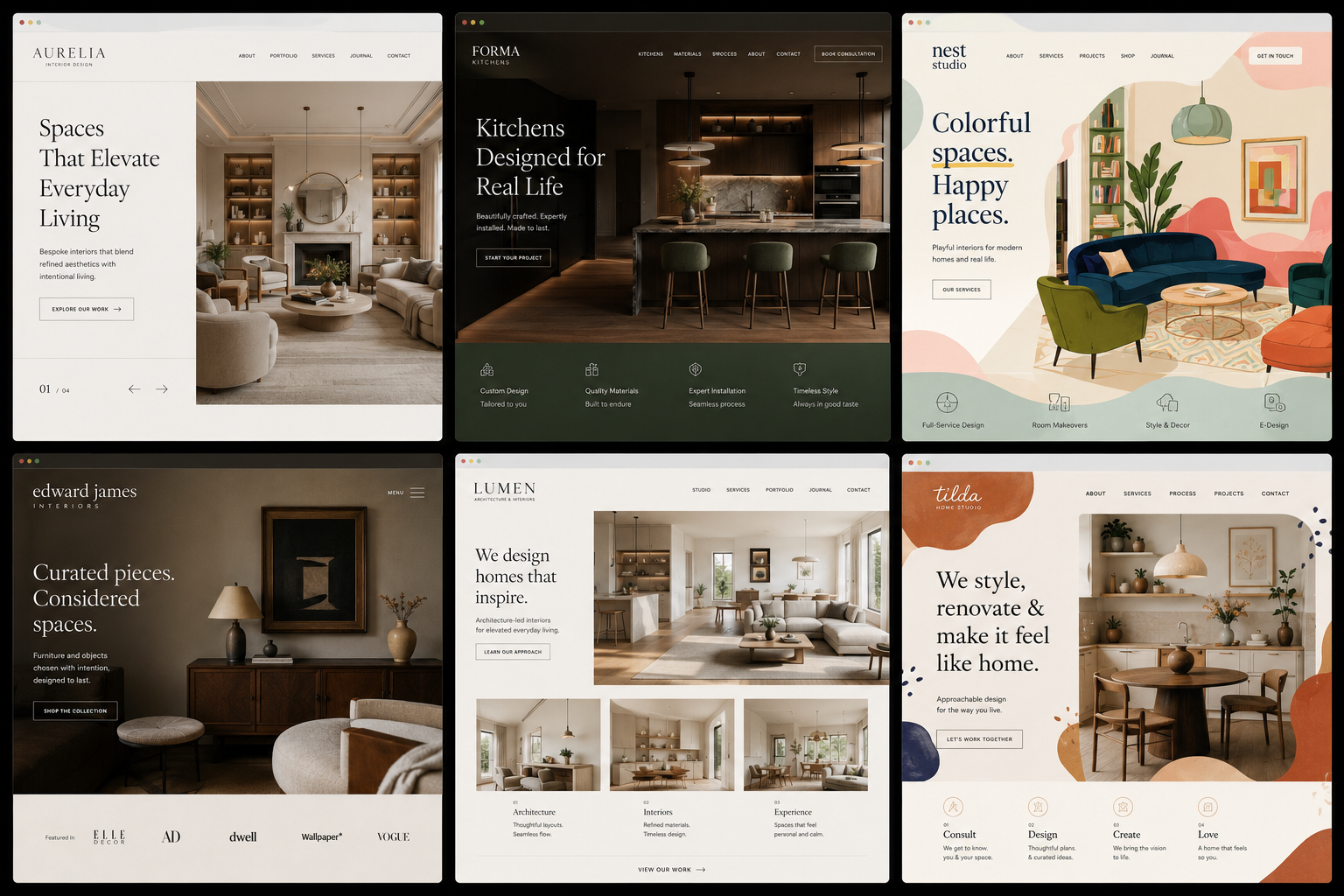
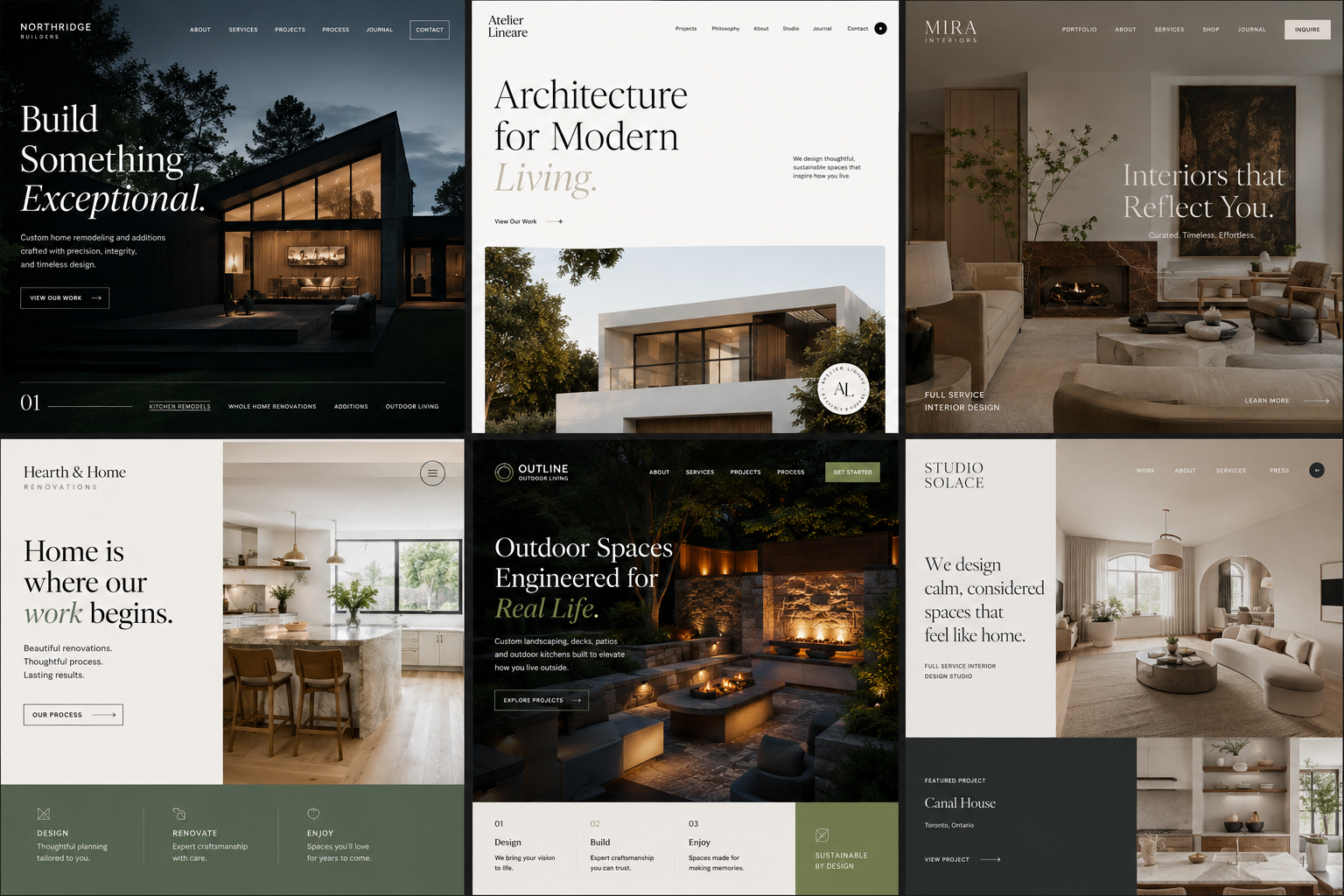
These approved GYRO example tiles are not Bear Creek projects. They show the kind of organized, visual proof system that would help Bear Creek turn completed work into stronger service-page and case-study assets.
Customer Journey and Conversion Review
A remodeling website has to serve different mindsets. A referral visitor wants reassurance. A high-intent search visitor wants comparison proof. An inspiration-stage visitor wants visual confidence and a reason to remember the business.
Referral visitor
What they need: Confirmation that the referral was right, a quick sense of fit, and an easy way to start a conversation.
Current friction: Testimonials help, but more project proof and a clearer “what happens next” path would reduce uncertainty.
Best next move: Add a “Start Here” path with project types, process summary, consultation expectations, and featured case studies.
High-intent search visitor
What they need: Evidence that Bear Creek handles their specific project type in Colorado Springs and is worth contacting over other firms.
Current friction: Service pages have useful intent but need stronger local proof, review proof, project scope, and budget/timeline guidance.
Best next move: Rebuild core service pages around proof, common questions, fit, and a short inquiry path.
Inspiration-stage visitor
What they need: Before-and-after visuals, design rationale, finished spaces, and educational content they can save or revisit.
Current friction: The public proof reviewed does not yet create a strong visual memory of Bear Creek’s work.
Best next move: Turn each project into a gallery, short story, social sequence, FAQ, GBP post, and sales-conversation aid.
Trust gaps to close
- Project-specific before-and-after examples.
- Scope, timeline, and design challenge context.
- Current third-party review count, rating, and recency.
- Full NAP or clearly stated service-area model.
- Pricing signals such as budget drivers or project-fit guidance.
- Updated veteran and adaptable-living grant information.
Form and CTA improvements
- Shorten the first inquiry form to reduce mobile friction.
- Add project-type selection so leads can be routed by service line.
- Add ZIP or neighborhood to qualify service-area fit.
- Add optional photo or plan upload after the first step, not before it.
- Place testimonials and project proof near contact points.
- Set a response-time expectation after submission.
Competitive Benchmark
The competitor set in the research packet came from a defensible local activity sample: active contractors appearing in Pikes Peak Regional Building Department permit records for overlapping services. This is not a universal ranking report or a full market census.
The competitive opening in plain English
Bear Creek appears broader and more differentiated than the permit-based sample because it combines interior remodeling, outdoor living, adaptable living, and residential elevators under one design-build umbrella. The risk is that narrower competitors can still win online if they publish stronger proof, clearer service pages, more local content, and more visible reviews in their specific lane.
| Competitor or active local contractor | Why it matters | Observed overlap | Bear Creek opening |
|---|---|---|---|
| Patterson Corporation | Appeared in official local permit records for a higher-value kitchen remodel. | Kitchen remodeling and interior alteration. | Differentiate with design-build process, premium proof, and specialty accessibility/elevator capability. |
| Colorado Craftsmen Co | Appeared in local permit records for kitchen remodeling. | Kitchen remodeling. | Use stronger project stories and service-page depth to show why Bear Creek is the better fit for complex projects. |
| C&R Contracting and Remodel, LLC | Appeared in local permit records for kitchen/general remodeling and a separate detached-garage project. | Kitchen and general residential work. | Clarify Bear Creek’s planning, communication, and client-portal advantages. |
| Pro Era Builders LLC | Appeared in local permit records for a new deck project. | Deck and outdoor-living overlap. | Repair or strengthen the decks and outdoor-living page with local examples and seasonal planning content. |
| By Design Home Services, Ltd. | Appeared in local permit records for basement finish work. | General residential improvement and finish work. | Position Bear Creek around whole-home thinking, design guidance, and multi-service project support. |
Service mix
The combined offer is stronger than any single category: kitchens, baths, outdoor living, accessibility, veterans modifications, design planning, and elevators.
Proof depth
A more specialized competitor can still look more credible online if their page has better photos, review proof, case studies, and clearer project-fit guidance.
Own the complex-project lane
Bear Creek should lean into projects where design, planning, coordination, mobility, and long-term livability matter.
Search, Content, and Authority Opportunities
The best content plan is not a pile of generic blog posts. It is a proof system. Each important service should have a strong page, each strong project should become multiple assets, and each asset should reinforce the same local entity.
Refresh the adaptable-living and veterans page
Why it matters: This is Bear Creek’s clearest niche authority opportunity. The page should carry current grant figures, careful guidance, accessibility examples, FAQs, and a consultation path that feels respectful and specific.
Suggested CTA: “Talk through your accessibility project.”
Rebuild service pages around project proof
Why it matters: Kitchens, baths, decks, design planning, and elevators should each answer how Bear Creek works, what projects are a fit, what decisions homeowners face, and what proof supports the claim.
Suggested CTA: “Request a planning conversation.”
Create case studies by service line
Why it matters: A case study can show scope, challenge, decisions, finish quality, timeline context, and client experience. That supports SEO, sales, social, and referrals at the same time.
Suggested CTA: “See what a similar project involved.”
Add location and neighborhood relevance carefully
Why it matters: Bear Creek should not mass-produce near-duplicate city pages. It should create meaningful local assets when there is a real reason: project examples, service-area clarity, neighborhood styles, permitting considerations, or local homeowner questions.
Suggested CTA: “Ask whether your home is in the service area.”
Publish project-fit and budget-driver guidance
Why it matters: Bear Creek does not need to publish fixed prices to provide pricing signal. It can explain what affects cost, what information is needed, and which projects are usually a good fit.
Suggested CTA: “Share a few details about your project.”
Build a review and GBP content rhythm
Why it matters: Reviews, photos, service updates, and project posts reinforce local trust. The site already points toward Google reviews, so the next move is making review generation and review use repeatable.
Suggested CTA: “Read what clients say about the process.”
Project-to-assets repurposing loop
One strong completed project should not live in one place. It should become a case study, service-page proof block, social sequence, short video outline, Google Business Profile post, FAQ entry, testimonial feature, local-search asset, and sales-conversation aid.
1. Project story
Capture scope, photos, challenge, and outcome.
2. Service proof
Add the story to the relevant service page.
3. Local trust
Repurpose into GBP, review, and local content.
4. Sales support
Use it in consults, follow-ups, and proposals.
Recommended Action Plan
The sequence matters. Bear Creek should fix the trust and measurement foundation before trying to buy more traffic. Once the website explains the work better and tracks inquiries properly, SEO, local activity, and paid campaigns become easier to judge.
Now
Update veterans and adaptable-living content
Replace stale grant figures, add current guidance, and build an FAQ around the homeowner’s real questions.
Clarify NAP and service-area signals
Add complete verified business details or a clear service-area explanation across the site and listings.
Shorten the first-step inquiry form
Ask for only what is needed to start: name, contact, ZIP, project type, and short note.
Set up tracking basics
Track calls, forms, consultation bookings, service requested, source, and landing page.
Next
Rebuild core service pages
Upgrade kitchens, bathrooms, decks, design planning, elevators, and adaptable living with proof, questions, project fit, and local detail.
Publish three strong case studies
Choose one kitchen or bath, one accessibility or elevator project, and one outdoor living or design-planning story.
Create a review request workflow
Ask every completed project for a review, then reuse the strongest service-specific themes on relevant pages.
Later
Build local content and authority
Add meaningful local pages, planning guides, FAQs, partner references, and project stories that reinforce Colorado Springs relevance.
Invest in photo and video proof
Capture before/after images, walkthroughs, client stories, planning conversations, and finish selections.
Use paid search only after landing-page fixes
Start with branded and high-intent local search, then expand only when lead quality and conversion data are visible.
Practical 90-Day Roadmap
This roadmap is built around outputs and signals, not guarantees. The goal is to make the site easier to trust, easier to measure, and easier to improve.
Fix the foundation
Strategic focus: Trust risks, page access, local basics, and measurement.
- Update veterans and adaptable-living content.
- Validate inaccessible or thin pages and repair priority links.
- Add full NAP or clear service-area statement.
- Shorten the inquiry form.
- Set up call, form, and consultation tracking.
Success signals: Clean conversion events, easier inquiry path, current specialty content, and verified local business details.
Build proof assets
Strategic focus: Service pages and case studies that make Bear Creek’s value easier to see.
- Rebuild kitchens, bathrooms, adaptable living, and elevators pages first.
- Create three case studies with before/after structure.
- Add testimonial blocks near CTAs.
- Create review-request workflow.
- Add LocalBusiness, Service, FAQ, and Review schema where eligible.
Success signals: Stronger service-page engagement, more proof available for sales, and clearer lead-source data.
Distribute and test
Strategic focus: Repurpose projects, reinforce local authority, and test conversion changes.
- Turn case studies into GBP posts, social content, FAQs, and sales aids.
- Add one or two meaningful local content assets.
- Run conversion tests on forms, CTAs, and proof placement.
- Consider a narrow paid-search test only after tracking works.
- Review lead quality by service and source.
Success signals: Better-fit inquiries, clearer service demand, and a repeatable content rhythm.
Conversion Experiments
These tests should not start as guesses. Track the current form, calls, and consultation bookings first. Then test one meaningful change at a time.
| Experiment | Hypothesis | Proposed change | Primary metric | Effort / confidence |
|---|---|---|---|---|
| Short first-step form | A simpler first step will reduce mobile friction without removing qualification. | Use name, contact, ZIP, project type, and short note. Ask deeper questions after submission. | Form completion rate and qualified inquiries. | Low effort / High confidence |
| Service-specific CTA routing | Visitors will convert better when the next step matches their project type. | Add CTA options for kitchen, bath, accessibility, elevator, deck, and planning projects. | CTA clicks by service and booked consultations. | Moderate effort / High confidence |
| Proof near contact points | Testimonials and case-study links near the form will reduce last-minute doubt. | Add one service-relevant testimonial and one project proof card beside or above the form. | Form starts and completions. | Low effort / Directional |
| Project-fit guidance | Clear fit guidance will improve lead quality and reduce low-fit inquiries. | Create a “What projects are a good fit?” section with service categories and planning expectations. | Qualified inquiry ratio and consultation fit. | Moderate effort / High confidence |
| Updated VA grant content CTA | Current, careful funding information will increase trust for adaptable-living visitors. | Add current figures, FAQs, and a CTA to discuss accessibility needs. | Accessibility page inquiries and consultation bookings. | Low effort / High confidence |
| Case-study card on service pages | Visitors comparing providers will spend more time and move toward contact when project proof is visible. | Add one featured case study to each core service page. | Case-study clicks, service-page engagement, assisted conversions. | Moderate effort / High confidence |
| Mobile call and schedule emphasis | Mobile visitors may prefer a direct call or quick scheduled consultation over a long form. | Add a clearer mobile click-to-call and consultation prompt without obscuring content. | Phone taps and consultation bookings. | Low effort / Directional |
| Thank-you page routing | A better post-submit experience will help keep leads engaged and set expectations. | After inquiry, route visitors to a thank-you page with response timing, next steps, and related case studies. | Booked consultations after form submission. | Moderate effort / Directional |
Measurement Plan
Traffic by itself is not the scoreboard. For Bear Creek, the better scoreboard is qualified inquiries by service line, geography, project fit, and source. That is how marketing connects to real project opportunities.
Qualified inquiries
Track every form, call, and booking by service requested, location, and fit.
Consultation bookings
Measure how many leads become scheduled conversations and which pages assist them.
Review velocity
Track new reviews, response rate, service-specific language, and review recency.
Service-page traction
Watch organic visits, engagement, CTA clicks, and conversions by core service page.
| KPI | Definition | Required tracking | Why it matters | Review cadence |
|---|---|---|---|---|
| Qualified inbound leads | Inquiries that match service area, service type, and project fit. | Forms, calls, consultation booking, service selection, lead notes. | Shows whether marketing is bringing the right jobs, not just more noise. | Monthly |
| Phone calls from organic/local | Calls that originate from website pages, GBP, or local listings. | Call tracking and source attribution. | High-intent remodel leads often still call first. | Monthly |
| Form submission rate | Share of visitors who complete the inquiry form. | Form start, form completion, abandonment, page source. | Measures whether the conversion path is too heavy or unclear. | Monthly |
| Booked consultations | Inquiries that turn into scheduled phone consultations or sales conversations. | Scheduler integration and CRM status. | Connects traffic to a real sales step. | Monthly |
| Lead source and service requested | Where the inquiry came from and what work the homeowner wants. | CRM fields, hidden form fields, call notes. | Shows which channels produce right-fit project types. | Monthly |
| Review count and average rating | Verified third-party reputation metrics. | GBP access and review monitoring. | Supports local trust and conversion confidence. | Monthly |
| Lead-to-consultation rate | Share of leads that become qualified conversations. | CRM stage tracking. | Helps separate traffic quality from sales-process friction. | Monthly or quarterly |
| Consultation-to-project rate | Share of consultations that become signed work. | CRM and revenue tracking. | Connects marketing to real project outcomes when the business can measure it. | Quarterly |
A repeatable system would fit this situation better than one-off campaigns.
Bear Creek’s opportunity is connected work: positioning, proof, website content, local SEO, reviews, social repurposing, GBP activity, analytics, and conversion testing all need to tell the same story. That is where GYRO’s Megaphone system may be useful.
The starting point would be a MOD, or Master Organization Document. For Bear Creek, the MOD would capture the services, project fit, customer concerns, proof, local relevance, voice, differentiators, and best sales angles. From there, the same material can support service pages, case studies, FAQs, social posts, Google Business Profile updates, review prompts, and sales follow-up.
Clarify the story
Define Bear Creek’s best-fit customer, highest-value services, and strongest differentiation so every page stops sounding generic.
Turn projects into proof
Use completed projects to create case studies, service-page proof, review prompts, social posts, and sales assets.
Measure what matters
Connect marketing activity to qualified leads, project type, service area, consultation bookings, and right-fit project conversations.
Megaphone should not replace Bear Creek’s real expertise. It should help make that expertise visible, organized, and easier to reuse.
Research Limitations
This audit is useful, but it is still an outside-in review. It should guide the next conversation and the first implementation sprint, not replace internal data.
Internal access needed before final target-setting
The research packet did not include access to Google Analytics, Search Console, CRM data, call recordings or call logs, lead quality notes, close rates, revenue by service, actual Google Business Profile management data, ad accounts, customer research, proposal data, or sales-process data.
That matters because several important baselines are currently unspecified: qualified inbound leads, form submission rate, phone calls from organic and local listings, booked consultations, rankings by service, review count and rating, organic traffic to service pages, close rate, and average project value by service line.
Those limitations do not weaken the most practical findings. The public website still shows clear strengths, clear proof gaps, clear local-search opportunities, and clear conversion friction that can be addressed before deeper data is available.
Bear Creek has strengths worth amplifying.
For Bear Creek Design + Build, the path is not about chasing every possible marketing tactic. It is about making the right things visible: the design-build process, the specialty accessibility work, the elevator capability, the project proof, the local trust, and the next step for a homeowner who is ready to talk.
You can implement these recommendations independently. The most important thing is the sequence: update trust-sensitive content, clarify local signals, simplify conversion, publish proof, measure leads properly, and then decide where more traffic makes sense.
GYRO could help connect that work through a MOD and Megaphone so the same story shows up across the website, search, local presence, social content, reviews, and sales conversations. The next step does not need to be a pressured sales commitment. It should be a practical conversation about the next 90 days.