
Digital Marketing, Website and Conversion Audit
Swift Restoration and Remodeling
Organic growth audit for a Northern Utah restoration and remodel company.
A practical outside-in review of brand clarity, emergency-service visibility, website trust, conversion flow, local search, content, reputation, and AI-search readiness for Swift Restoration and Remodeling in Ogden, Utah.
The best opportunity is to turn a real restoration-and-rebuild business into a cleaner, more trusted digital presence.
Swift Restoration and Remodeling has the substance many competitors would like to have: emergency restoration, reconstruction capability, local history, owner visibility, case-study content, financing, and third-party trust signals. The website already gives search engines and homeowners a lot to work with. The main issue is that the current presentation is uneven, which may reduce trust at exactly the moment a homeowner is deciding who to call.
Restoration plus reconstruction is a strong market position.
Swift can help with water, fire, mold, sewage, emergency cleanup, insurance coordination, and rebuilding. That full path matters because disaster leads are not just buying cleanup; they are trying to get their home or business back.
Trust is being diluted by avoidable website inconsistencies.
The public website shows multiple phone numbers, mixed geography references, visible placeholder copy such as generic image captions, and several editing issues. These are fixable, but they create doubt for high-stress visitors.
Unify the emergency conversion path.
Make one primary phone number, one emergency CTA, one form path, and one tracking model consistent across every page. This should happen before heavier SEO, paid media, or content scaling.
Own Ogden and Northern Utah service intent more cleanly.
The site has many service pages, but the strongest pages should be rewritten around specific buyer problems: flooded basement, burst pipe, sewage backup, mold after water damage, fire rebuild, and insurance-backed reconstruction.
Case studies are a major advantage that should be standardized.
Swift already publishes project stories. The next step is to turn each one into a structured proof asset with project type, city, problem, response, equipment/process, rebuild scope, photos, outcome, and testimonial.
Fix trust, clarify positioning, then scale content.
Start with phone/NAP cleanup, form testing, page QA, review visibility, and analytics. Then improve core service pages and case studies. After that, use Megaphone-style repurposing to distribute proof across search, social, GBP, and sales conversations.
There is a useful business foundation here, not just a website that needs SEO work.
Swift Restoration and Remodeling appears to be best understood as a damage restoration company with reconstruction and remodeling capability, rather than a conventional remodeler alone. That matters because the strongest marketing angle is not “we remodel kitchens and bathrooms.” It is “when damage happens, we can respond, restore, coordinate, rebuild, and improve the space.”
Visible local credibility
The site and public business profiles show an Ogden address, 24/7 emergency positioning, a contractor license number on the contact page, BBB accreditation, an A+ BBB rating, and public references to IICRC certification. These trust signals are especially valuable in restoration because customers are often anxious, dealing with insurance, and worried about hidden damage.
Broad service coverage
Swift has dedicated pages or navigation paths for water damage restoration, sewage cleanup, leak detection, flooded basement cleanup, fire damage restoration, mold remediation, mold inspection, board-up, lead paint removal, commercial restoration, residential restoration, insurance claims, reconstruction, kitchen remodeling, bathroom remodeling, general contracting, odor removal, disinfection, and contents cleaning.
Recent content activity
The blog and case-study areas include recent content about spring flooding, runoff, water-damage documentation, basement restoration, fire damage recovery, and local Northern Utah project examples. That is a meaningful start toward organic visibility and AI-search readiness because it gives both humans and search systems more context than a thin brochure site would.
Real project proof exists
The case studies are one of Swift’s most underused advantages. They show water damage traveling across multiple rooms, professional drying, demolition, fire-damage cleanup, insurance support, and reconstruction. These stories can become stronger service-page proof, social sequences, GBP posts, FAQ answers, and sales-conversation material.
Insurance and financing support
The website communicates insurance coordination and a financing relationship with Hearth. Those are useful trust and conversion assets. Restoration customers may be waiting on claims, while remodeling customers may need payment flexibility. The opportunity is to explain these carefully without overpromising what insurance will cover.
Owner and community story
The About page includes a personal owner profile, construction background, local service history, and community references. This is valuable because many competitors rely on generic franchise or contractor language. Swift can use its local story more consistently across the homepage, About page, review strategy, and social content.
Swift should lead with emergency restoration and rebuild confidence, then support remodeling as a natural extension.
Current position
The current website tries to serve three overlapping markets: emergency damage restoration, reconstruction after loss, and planned remodeling. That breadth is useful, but the hierarchy is not always clear. A homeowner with water pouring through a ceiling needs immediate reassurance and a phone number. A homeowner planning a bathroom remodel needs process, design, timeline, proof, and budget expectations. Those two buyers have different emotional states and decision paths.
For Swift, the strongest market fit appears to be the middle lane: “We are the local restoration team that can also rebuild.” That creates a sharper point of difference from restoration-only companies, cleaning-only providers, and remodelers who do not want insurance-backed damage work.
Home or business owner with active water, sewage, fire, mold, or storm damage who needs fast response, drying, cleanup, documentation, and confidence.
Property owner whose damaged space needs repair, rebuilding, finish work, and coordination after mitigation.
Homeowner considering kitchen, bath, basement, or multi-room updates who values a contractor with restoration and construction experience.
A directional assessment of the public marketing system.
This scorecard is an outside-in assessment based on public information. It is not a substitute for Analytics, Search Console, call tracking, CRM data, close-rate data, or direct GBP management access.
| Area | Status | What this means | Best next move |
|---|---|---|---|
| Brand clarity | Developing | The restoration-plus-remodeling offer is strong, but the site does not always make the service hierarchy clear. | Define one primary market position and split emergency, reconstruction, and planned remodel paths. |
| Website experience | Needs attention | Useful content exists, but editing issues, placeholder copy, repeated CTAs, and mixed phone numbers create friction. | Complete a trust and QA pass across all high-traffic pages. |
| Technical foundation | Developing | Pages are crawlable in the public review, but widget loading, forms, schema, speed, and tracking need direct validation. | Run a technical audit with crawl, PageSpeed, schema, form, and mobile checks. |
| Service-page depth | Competitive | There are many dedicated service pages, but several need sharper local proof, less generic copy, and better conversion design. | Refresh the highest-value service pages first: water, flooded basement, sewage, mold, fire, and reconstruction. |
| Local search | Developing | The business has public NAP signals, BBB presence, Yelp presence, and local pages, but consistency needs improvement. | Standardize name, address, primary phone, hours, service areas, and categories across all public profiles. |
| Reviews | Needs attention | BBB credibility is strong, Yelp shows a small visible review sample, and the website Reviews page appears underdeveloped. | Build a review acquisition, response, and on-site proof system tied to service type and city. |
| Portfolio proof | Competitive | Case studies are present and recent, which is a meaningful asset for restoration and rebuild trust. | Standardize case-study templates and reuse them across service pages and social. |
| Social content | Not publicly verifiable | Social links are visible, but current activity and audience signals were not reliably accessible during this review. | Audit profiles internally and create a project-to-content repurposing workflow. |
| Conversion path | Needs attention | Emergency CTAs exist, but phone inconsistencies and generic quote paths can reduce confidence and tracking quality. | Create separate “Emergency Help” and “Plan a Remodel/Rebuild” conversion routes. |
| Analytics readiness | Not publicly verifiable | Public tools did not provide enough information to confirm event tracking quality. | Validate call, form, service, source, location, and lead-quality tracking internally. |
| AI-search readiness | Developing | The site has entity information and content depth, but inconsistent claims and scattered proof can confuse AI summaries. | Build a clear entity profile, structured data, service facts, FAQs, and consistent third-party corroboration. |
| Competitive differentiation | Competitive | Swift can differentiate as local, emergency-ready, reconstruction-capable, and owner-led. | Make that differentiation obvious above the fold and near every conversion point. |
The website has many of the right ingredients, but the trust architecture needs tightening.
1. Brand and messaging
Observed: The site uses strong emergency language, local ownership language, insurance support, IICRC certification claims, BBB badges, and restoration/remodeling service breadth. It also uses broad claims such as “top choice,” “premier,” and “preferred,” which are common in the category.
Why it matters: Restoration customers make decisions under stress. Generic claims are less persuasive than proof. Swift’s stronger message is not simply that it is “reliable”; it is that the team can respond quickly, document damage, dry properly, work with insurance, and rebuild.
Next: Rewrite the homepage hero and core service intros around concrete buyer concerns: “What happened?” “Can you come now?” “Will you document it?” “Will you help with insurance?” “Can you rebuild what was removed?”
2. Website structure and user experience
Observed: The navigation is service-rich, which is good for coverage, but it may be heavy for urgent mobile visitors. The same footer and emergency CTA repeat across many pages, and several Ogden pages contain a repeated Layton emergency line. Some content areas show generic captions such as “City skyline” and “Photo By: John Doe.”
Why it matters: A customer dealing with a flood or sewage backup wants clarity. Every visible inconsistency asks the visitor to do extra trust work before calling.
Next: Simplify the mobile decision path into two top-level actions: “Emergency Restoration Help” and “Reconstruction or Remodel Estimate.” Then QA all repeated global sections.
3. Technical SEO and performance
Observed: Public pages were accessible during the review, and the site has indexable service content. The automated public view also exposed repeated “Loading map,” “Loading contact form,” and widget placeholders, which should be checked directly in normal browsers. The review did not reliably confirm sitemap, schema, Core Web Vitals, or analytics implementation.
Why it matters: Emergency restoration leads often come from mobile devices. Slow, shifting, or widget-heavy pages can reduce calls and form completions. Technical clarity also helps search engines understand the business entity and service areas.
Next: Run a full crawl and mobile performance test on the homepage, water damage page, reconstruction page, and contact page. Validate schema, canonical tags, sitemap, image weight, and form behavior.
4. Organic search and content architecture
Observed: Swift has broad service coverage and a blog with relevant water-damage topics. The highest-value terms likely include water damage restoration Ogden, flooded basement cleanup Ogden, sewage cleanup Ogden, mold remediation Ogden, fire damage restoration Ogden, restoration insurance claims Utah, and reconstruction after water damage.
Why it matters: Many service pages currently read like general SEO copy. They need more job-specific proof, local context, FAQs, and conversion modules to compete against franchise brands and specialized providers.
Next: Rebuild the core service pages around intent clusters: emergency water, contaminated water/sewage, fire/smoke, mold, reconstruction, and planned remodels.
5. Local search, GBP, and citations
Observed: The business name, Ogden address, 24/7 hours, and primary phone appear in public sources, but the website itself shows multiple phone numbers in different areas. The contact page shows one number, service pages show another top number, and some homepage CTAs show a different number.
Why it matters: Phone consistency matters to customers, local search systems, directories, call tracking, and AI-assisted search. Multiple visible numbers may be intentional tracking numbers, but they need a canonical strategy.
Next: Choose the canonical customer-facing number and document any tracking-number rules. Make all public profiles, site headers, footers, schema, and CTAs consistent.
6. Reviews and reputation
Observed: BBB signals are strong. Yelp shows a small public review sample and appears unclaimed in the available public view. The website’s Reviews page appears thin or effectively empty in the public output, despite review links and trust badges elsewhere.
Why it matters: Reviews are especially important for restoration because customers are inviting a company into a damaged home during a stressful event. A strong review page can also support service pages and AI-search credibility.
Next: Build a review strategy by service and city. Feature short, responsible review excerpts near relevant CTAs, and create a system for requesting reviews after emergency mitigation, rebuild completion, and remodel completion.
7. Portfolio, social, and visual content
Observed: Swift has project photos and case studies, including recent Kaysville, Farmington, Layton, and Ogden examples. Several pages have image placeholders or weak captions, and social activity was not reliably visible in the public review environment.
Why it matters: Restoration work is inherently visual. Before-and-after evidence reduces perceived risk and helps explain why professional drying, demolition, and reconstruction matter.
Next: Treat every completed project as a content asset. A single strong project should produce one case study, three to six social posts, one GBP post, one FAQ, one service-page proof block, one testimonial feature, and one sales proof card.
8. Conversion path and lead quality
Observed: CTAs such as “Get a Quote,” “Call Now,” and “Get a Free Estimate” appear throughout the site. The form path appears generic, and the same quote language is used for emergencies and planned remodeling.
Why it matters: Emergency and remodel leads should not be treated the same. Emergency leads need fast triage, while planned remodel leads need qualification, service fit, budget, timeline, and expectations.
Next: Use two conversion paths: an emergency route with phone-first design and a planned project route with service, location, timeline, budget range, photos, and preferred contact method.
9. Analytics and measurement readiness
Observed: Public information was not enough to verify whether Google Analytics, Google Tag Manager, call tracking, form events, GBP actions, or CRM fields are configured correctly.
Why it matters: Without clean tracking, Swift cannot know which services, pages, cities, or channels produce qualified jobs instead of low-fit leads.
Next: Validate tracking for phone clicks, form submissions, emergency calls, service requested, location, lead source, project type, and lead quality. Do this before major traffic campaigns.
10. AI-search and GEO readiness
Observed: Swift has the raw materials AI systems need: services, local address, owner story, third-party profiles, service pages, and case studies. The weak spots are consistency, specificity, and structured corroboration.
Why it matters: AI-assisted search favors entities that are easy to understand and confirm. Inconsistent phone numbers, mixed service-area statements, and generic claims make the business harder to summarize accurately.
Next: Build a clean entity profile with consistent NAP, service taxonomy, organization schema, LocalBusiness schema, Service schema, FAQ schema where appropriate, and proof-rich service pages.
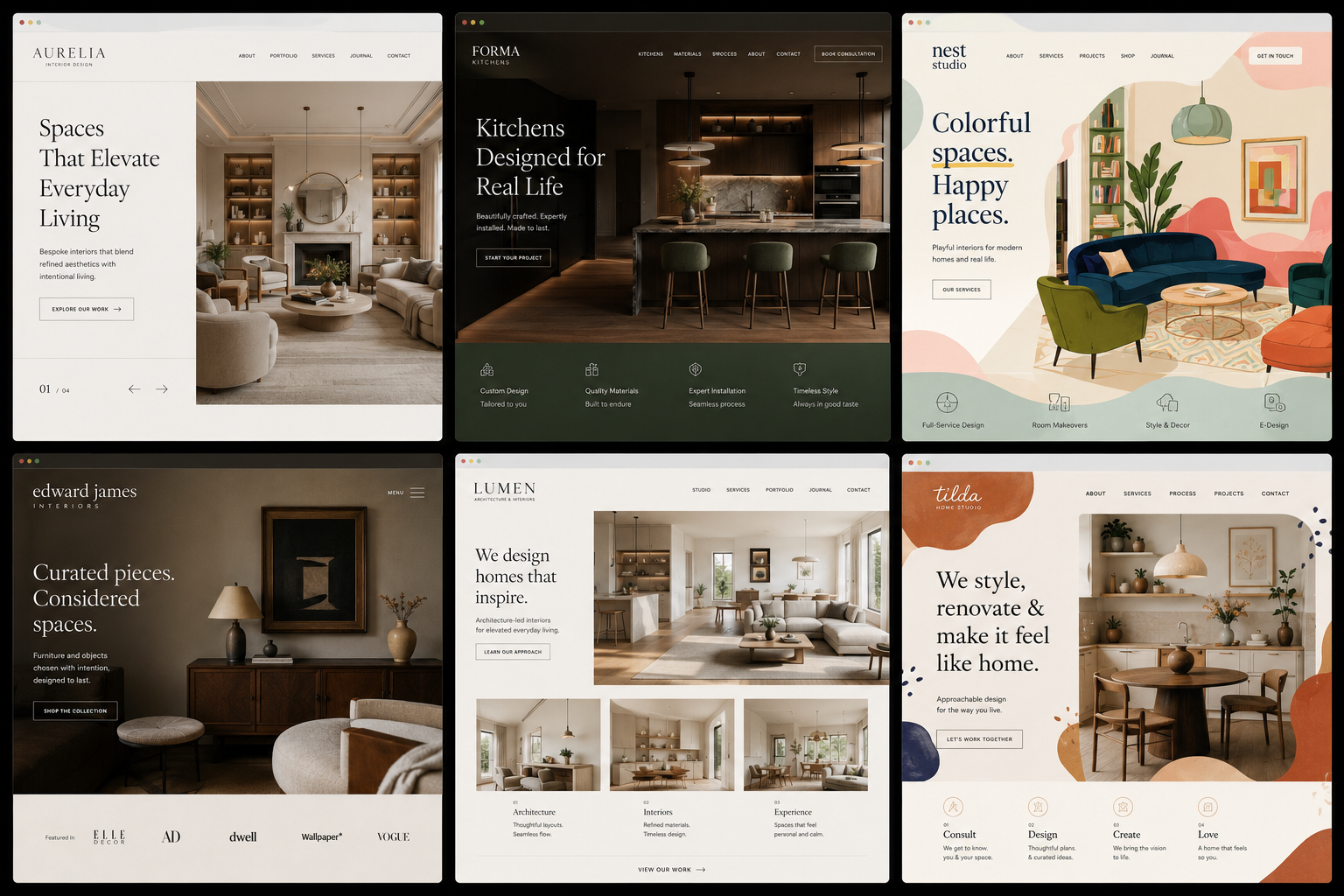
Different visitors need different reassurance before they call.
A restoration/remodeling website has to serve urgent, comparative, and inspirational journeys at the same time. Swift can improve lead quality by making each journey more obvious.
| Visitor type | What they need | Current friction | Recommended improvement | Primary conversion action |
|---|---|---|---|---|
| Referral visitor who already knows Swift | Confirmation that Swift is legitimate, local, available, licensed, insured, and appropriate for their problem. | Multiple phone numbers and repeated generic CTAs can create uncertainty. | Show one consistent emergency number, local address, license, BBB/IICRC proof, service fit, and “what happens after you call.” | Call for emergency help or request a scheduled estimate. |
| High-intent search visitor comparing providers | Fast proof that Swift handles their exact issue in their city and can coordinate mitigation, insurance, and rebuild. | Service pages have useful content but need stronger proof, local examples, and clearer differentiation from franchises. | Add service-specific case studies, response/process steps, insurance documentation expectations, and short trust modules near CTAs. | Emergency call or service-specific quote form. |
| Inspiration-stage visitor from social, images, or case studies | Before-and-after visuals, project context, rebuild/remodel possibilities, design confidence, and a low-pressure next step. | Case studies exist but are not yet fully packaged as visual sales assets. | Create project galleries with problem, scope, city, before, process, after, materials, timeline context, and testimonial. | Plan a reconstruction/remodel consultation. |
Trust-gap inventory
- Phone-number inconsistencies should be resolved or explained through a call-tracking plan.
- Website claims about years of experience should be standardized; the public content currently uses several different ranges.
- Placeholder captions and generic image labels should be removed.
- The Reviews page should not look empty when reputation is a major trust driver.
- Service-area language should include Ogden and surrounding cities consistently.
- License, insurance, BBB, IICRC, financing, and warranty/guarantee claims should be displayed with clear scope and without overstatement.
Form and lead-qualification recommendations
Keep emergency leads simple: name, phone, address or city, type of damage, whether active water is present, and permission to call. For planned reconstruction or remodeling, add project type, city, ideal timing, rough budget range, insurance involvement, and photo upload. The goal is not to make the form longer; it is to route the lead correctly.
Swift competes against national franchises, regional restoration firms, local damage specialists, and remodelers.
The competitive opening is not to look bigger than everyone else. It is to look more specific, local, trustworthy, and easier to choose for the restoration-to-rebuild path.
| Competitor | Why they matter | What they appear to do well | Opening for Swift |
|---|---|---|---|
| SERVPRO of Ogden | Direct restoration competitor with national brand recognition, 24/7 emergency positioning, water/fire/mold/storm/construction services, and a visible Google review module. | Strong franchise trust, clear emergency phone path, local service area, recognizable brand language, and extensive restoration category coverage. | Swift can differentiate with a more personal local story, stronger rebuild/remodel proof, and project case studies that feel less franchise-generic. |
| All Pro Services | Regional restoration competitor with broad service architecture, long operating history claims, IICRC messaging, location pages, projects, payment options, and 24/7 positioning. | Deep service menu, visible emergency language, many location/service pages, and strong “call now” direction. | Swift can focus more tightly on Ogden and Northern Utah, improve content quality, and make proof feel more local and less mass-produced. |
| Certified Disaster Services | Appears in local damage-restoration directory samples for Ogden and surrounding areas. | Clear damage-restoration category fit and visible local review presence in directory results. | Swift can out-position with a stronger owned website, better service education, and a more complete insurance-to-rebuild explanation. |
| Disaster Pros | Appears in local restoration samples serving West Haven and nearby communities, overlapping with Swift’s Ogden-area reach. | Local damage-restoration relevance and positive public review signals in directory samples. | Swift can create stronger city-specific case studies and more direct emergency CTAs for Ogden, Weber County, and Davis County. |
| DreamMaker Ogden | Relevant remodeling competitor for planned kitchen, bath, and interior remodel intent. | More clearly remodel-focused positioning and design/remodel perception. | Swift should decide whether planned remodeling is a core growth lane or a secondary service. If core, it needs a more polished remodeling proof system. |
| Utah Basement Kitchen and Bath / 5 Star Kitchen and Bath | Relevant competitors for bathroom, kitchen, and basement remodel comparisons in the broader Northern Utah market. | Specific remodel category association and consumer-facing project language. | Swift can own “reconstruction and practical remodels after damage” while also packaging planned remodels with better before-and-after proof. |
Competitive opening in plain English
Swift’s strongest lane is not just “another water damage company” or “another remodeler.” It is the local restoration team that can stay with the homeowner from first emergency call through documentation, mitigation, reconstruction, and improvement. The website should make that continuity obvious within the first few seconds.
Prioritize pages and proof that match urgent buyer intent.
Swift does not need a large volume of generic blog posts. It needs fewer, stronger assets that help homeowners choose the right provider and help search systems understand Swift’s services, cities, and proof.
| Opportunity | Intent | Why it matters | Suggested format | CTA | Priority |
|---|---|---|---|---|---|
| Water Damage Restoration in Ogden | Emergency service | Likely highest-value core query and service page. Needs proof, response steps, insurance documentation, and call-first design. | Flagship service page | Call for 24/7 help | Immediate |
| Flooded Basement Cleanup | Problem-specific emergency | Basement flooding is concrete, emotional, and local-seasonal. It can support spring runoff, snowmelt, sump, and appliance content. | Service page plus FAQ cluster | Emergency call | Immediate |
| Sewage Cleanup | Urgent health/safety concern | Higher trust barrier and higher urgency. Page should explain contamination, safety, cleanup steps, and when not to DIY. | Service page refresh | Call emergency team | High |
| Fire Damage Restoration and Rebuild | High-consideration restoration | Fire damage requires emotional reassurance, smoke/odor expertise, insurance communication, and rebuilding proof. | Service page with case study embeds | Schedule assessment | High |
| Insurance Claim Restoration | Process and reassurance | Insurance support is a visible Swift claim. The page should explain documentation and coordination without making coverage promises. | Process page and FAQ | Ask about claim support | High |
| Reconstruction After Water or Fire Damage | Mitigation-to-rebuild | This is Swift’s strongest differentiation lane. It connects restoration, contracting, remodeling, and peace of mind. | Service hub plus case studies | Plan rebuild estimate | Immediate |
| Ogden / Weber County Service Area | Local fit | The service-area system should start with the home market and then expand with real local details, not duplicate city pages. | Local hub page | Call local team | High |
| Case Study Library | Proof and comparison | Each project should show city, problem, damage type, response, process, photos, outcome, and related services. | Structured case-study template | Get similar help | High |
| Kitchen and Bathroom Remodeling | Planned remodel | These pages currently exist but compete with more specialized remodelers. They need clearer fit, portfolio proof, budget guidance, and process. | Refresh only if remodels are a priority | Plan consultation | Medium |
| Review and Reputation Hub | Trust validation | The current Reviews page should become a real proof asset, not a thin page. | Review page by service theme | Read reviews / request help | High |

Fix the foundation first, then build the content engine.
| Stage | Action | Reason | Priority | Effort | Confidence | KPI |
|---|---|---|---|---|---|---|
| Now | Standardize phone numbers, NAP, service-area language, and footer/header information. | Trust and attribution are weakened when the website shows different numbers and mixed geography references. | Immediate | Low to moderate | High confidence | One canonical NAP set; verified call tracking map. |
| Now | Complete a page QA pass on homepage, water damage, fire, mold, sewage, reconstruction, contact, and top remodel pages. | Typos, placeholder captions, and repeated Layton lines on Ogden pages reduce confidence. | Immediate | Moderate | High confidence | Zero visible placeholder copy on priority pages. |
| Now | Validate forms, mobile click-to-call, map widgets, review widgets, and tracking events. | Emergency leads are often mobile and urgent; forms and phone clicks must work cleanly. | Immediate | Moderate | Requires internal validation | Successful test submissions and tracked phone events. |
| Now | Update the Reviews page and review request process. | Public proof is essential in restoration and remodeling. A thin reviews page wastes trust equity. | High | Moderate | High confidence | Review page published; review requests sent after completed jobs. |
| Next | Rewrite the homepage around the restoration-to-rebuild path. | The strongest positioning is emergency response plus reconstruction support from a local team. | High | Moderate | High confidence | Higher call click rate and form completion rate after tracking baseline. |
| Next | Refresh core emergency service pages with proof, process, FAQs, and service-specific CTAs. | High-intent pages need to convert, not just rank. | High | Significant | High confidence | Organic landing-page inquiries by service. |
| Next | Standardize case studies and embed them into service pages. | Swift already has project content. Better structure will make it more persuasive and reusable. | High | Moderate | High confidence | One complete case study per month. |
| Later | Build carefully differentiated city/service-area pages. | Location pages can help, but only if they include real local context, nearby proof, and useful visitor information. | Medium | Significant | Directional | Local organic entrances and qualified calls by city. |
| Later | Scale social, GBP, and email repurposing from project stories. | Content should reinforce the same proof across every channel. | Medium | Moderate | Directional | Monthly project content package published. |
| Later | Consider paid search or Local Services Ads only after tracking and conversion paths are clean. | Paid media can amplify a strong system but wastes budget when phone numbers, forms, and proof are inconsistent. | Later | Varies | Requires internal validation | Cost per qualified emergency or remodel lead. |
A sensible sequence for improvement without creating unnecessary disruption.
First 30 days: trust, tracking, and cleanup
Choose the canonical phone strategy, clean up NAP and repeated page sections, test mobile calls and forms, remove placeholder copy, fix obvious typos, verify core technical settings, and confirm analytics/call/form tracking. Update the Reviews page enough that it becomes a real trust asset. Success signal: priority pages are clean, calls and forms are trackable, and Swift can see which service and city each inquiry came from.
Days 31–60: positioning and core service pages
Rewrite the homepage around emergency response plus reconstruction. Refresh water damage, flooded basement, sewage cleanup, mold remediation, fire damage, and reconstruction pages with service-specific proof, FAQs, local context, and clearer CTAs. Success signal: top service pages provide a clear answer to “why call Swift instead of a franchise or general contractor?”
Days 61–90: proof, reputation, and distribution
Standardize case studies, publish at least two complete project stories, begin a review request workflow, repurpose project proof into social and GBP updates, and build the first improved Ogden/Weber County location hub. Success signal: every completed project has a repeatable path into website, social, local search, reputation, and sales proof assets.
Test changes after tracking is configured; do not guess winners.
| Experiment | Hypothesis | Proposed change | Primary metric | Secondary metric | Track first | Effort | Confidence |
|---|---|---|---|---|---|---|---|
| Emergency-first hero | Emergency visitors will act faster when the hero clarifies response, documentation, insurance, and rebuild. | Replace generic hero copy with a restoration-to-rebuild value proposition and one call-first CTA. | Mobile call click rate | Form starts | Phone click events by page | Low | High |
| Two-path CTA | Separating emergencies from planned projects will improve both conversion and lead quality. | Add “Emergency Help Now” and “Plan a Rebuild or Remodel” paths. | Qualified inquiry rate | Wrong-fit lead reduction | Lead type field | Moderate | High |
| Sticky mobile call bar | Urgent mobile visitors are more likely to call when the primary phone action remains visible. | Add a non-obtrusive sticky call bar on emergency pages. | Mobile calls | Scroll depth | Device and page segmentation | Low | High |
| Proof near form | Service-specific reviews and case studies near the form will increase trust. | Add a short review, BBB/license/IICRC proof, and related case study above the form. | Form completion rate | Time on page | Form submit events | Low | Directional |
| Short emergency form | Emergency form friction may be reduced by asking only triage essentials. | Use a short emergency form with damage type, city, phone, and active-water question. | Emergency form completion | Call-back quality | Emergency vs planned route | Moderate | High |
| Case-study cards on service pages | Visitors comparing providers will trust pages more when they see real nearby jobs. | Add two relevant project cards to each priority service page. | CTA clicks from service pages | Case-study clicks | CTA source events | Moderate | High |
| Insurance process module | Visitors with claims will convert more confidently if the process is explained clearly. | Add “How we help document and coordinate with insurance” without promising coverage. | Insurance-related inquiries | FAQ engagement | Service and claim fields | Low | Directional |
| Review request timing | Review volume and usefulness will improve when requests are tied to emotional milestones. | Request one review after emergency stabilization and another after completed reconstruction/remodel. | New review velocity | Service-specific review themes | Job completion stage | Moderate | Directional |
Measure qualified demand, not just traffic.
Traffic growth only matters if it produces the right emergency, reconstruction, and remodeling inquiries. The measurement plan should separate activity metrics from business-outcome metrics.
| KPI | Definition | Required tracking | Why it matters | Review cadence |
|---|---|---|---|---|
| Qualified inquiries | Calls or forms from service areas that match Swift’s preferred services. | Call tracking, forms, service requested, city, source. | Shows whether marketing is producing usable opportunities. | Weekly |
| Emergency calls | Phone leads from water, sewage, fire, mold, or storm damage pages. | Phone click/call tracking by landing page and device. | Most urgent restoration demand is phone-led. | Weekly |
| Form submissions by type | Emergency, reconstruction, planned remodel, commercial, or other. | Form fields and hidden landing-page/source fields. | Helps route leads and evaluate content quality. | Weekly |
| Organic landing pages | Pages that attract non-paid search visitors. | Analytics and Search Console. | Shows which service and city pages are earning visibility. | Monthly |
| Local search actions | Calls, direction requests, website clicks, and messages from GBP where available. | GBP insights and call tracking. | Restoration decisions often happen in maps and local packs. | Monthly |
| Review velocity | New reviews, review recency, response rate, and service themes. | Review platform monitoring. | Improves trust, local SEO, and sales proof. | Monthly |
| Lead-to-consultation rate | Percentage of inquiries that become assessments, inspections, estimates, or consultations. | CRM or lead sheet status tracking. | Separates lead volume from lead quality. | Monthly |
| Consultation-to-project rate | Percentage of assessments or estimates that become work. | CRM, estimate, and job outcome data. | Connects marketing changes to business outcomes without guessing revenue impact. | Monthly or quarterly |
Swift’s opportunity is a coordinated operating system, not a pile of disconnected fixes.
The immediate work can be done independently: clean up phone numbers, fix pages, test forms, improve service pages, and strengthen reviews. Where GYRO may be useful is in turning that work into a repeatable system.
The MOD can create one source of truth.
A Master Organization Document would capture Swift’s services, proof, differentiators, service areas, voice, customer concerns, credentials, review themes, case-study structure, and priority offers. That would reduce inconsistency across the website, local profiles, social content, and future campaigns.
Megaphone can coordinate organic channels.
Megaphone is well suited to turning one project into a connected set of assets: website case study, service-page proof, search content, social posts, GBP updates, review prompts, and measurement feedback. The goal is not simply to publish more. It is to make every channel reinforce the same market position.
Conversion support can keep content accountable.
Service pages, project stories, and local content should be judged by qualified inquiries, calls, and consultation quality, not by word count alone. GYRO could help configure the tracking and content rhythm so improvements are validated over time.
AI-search readiness becomes a byproduct of clarity.
GEO is not a trick. It comes from clear entity information, consistent service descriptions, helpful FAQs, structured data, local proof, reviews, and third-party corroboration. Those are the same fundamentals that help human customers trust Swift.

This is an outside-in audit based on public information.
The findings are useful for prioritization, but several important items require internal access before final decisions are made.
Needs internal validation
- Google Analytics and Google Tag Manager setup
- Search Console queries, indexing, and landing-page performance
- Google Business Profile categories, services, photos, posts, and insights
- Call tracking configuration and call quality
- Form tracking and form completion errors
- CRM stages, lead quality, close rates, and revenue by service
- Ad account activity and paid-lead quality
- Actual mobile performance and Core Web Vitals
Important caution
Public tools sometimes show “loading” text for maps, review widgets, and contact forms that may function correctly for normal users. Those items should be tested directly on desktop and mobile before being treated as confirmed user-facing problems.
Similarly, exact Google review totals, GBP configuration, and social-follower metrics should be validated inside the owned accounts rather than inferred from incomplete public access.
Swift has real strengths worth amplifying.
The recommendations in this audit can be implemented independently: clean up trust issues, clarify the emergency conversion path, improve service pages, strengthen review proof, and turn completed projects into reusable content. If Swift would rather connect those improvements into one coordinated system, GYRO can help build the MOD and configure Megaphone around the business’s services, market, voice, proof, and growth priorities.